

Summer fevers often get wrongly labelled as ‘just viral,’ delaying crucial diagnoses for illnesses like malaria. Experts urge vigilance for persistent fevers, chills, and unusual fatigue. Timely testing and basic precautions are vital to prevent serious complications, ensuring faster recovery and safeguarding health against overlooked infections.
Every summer, the same story repeats in homes and clinics. A fever shows up, brings along body aches and fatigue, and is quickly dismissed as “just viral.” Most of the time, that assumption holds true.
But sometimes, it hides something more serious.Dr Sandeep Reddy Koppula, HOD – Internal Medicine, puts it plainly, “Every summer, clinics start seeing the same pattern—fever, body aches, fatigue. It’s often labelled as ‘just a viral,’ and in many cases, that’s true. But not always.”This “not always” is where the real concern lies. Because when infections like malaria are mistaken for a simple viral illness, the delay can quietly worsen a person’s health.
When fever doesn’t follow the usual script
A typical viral fever settles within three to four days with rest, fluids, and basic care. The body recovers, and life moves on.But not every fever behaves this way.Some fevers linger. Some come and go. Some bring chills that feel sharper than usual. These are not random variations, they are signals. Malaria, for instance, often starts like any other fever but follows a pattern that is easy to miss in the early days.The Government of India’s National Centre for Vector Borne Diseases Control (NCVBDC) notes that malaria symptoms can appear mild at first but may worsen without timely treatment.
Ignoring these early differences often leads to late diagnosis.
The overlooked clues: chills, sweating, and patterns
Many people describe fever as a single experience, feeling hot and tired. But the body often tells a more detailed story.A sudden chill that makes someone shiver, followed by a spike in temperature, and then heavy sweating, this cycle is not just “part of fever.” It is a pattern.Dr Koppula highlights this clearly, “Chills and sweating aren’t just ‘part of fever.’
These patterns matter more than the temperature reading alone.”These patterns are common in malaria and some other infections. But they are easy to ignore because the focus often stays on the thermometer, not on how the body feels through the day.
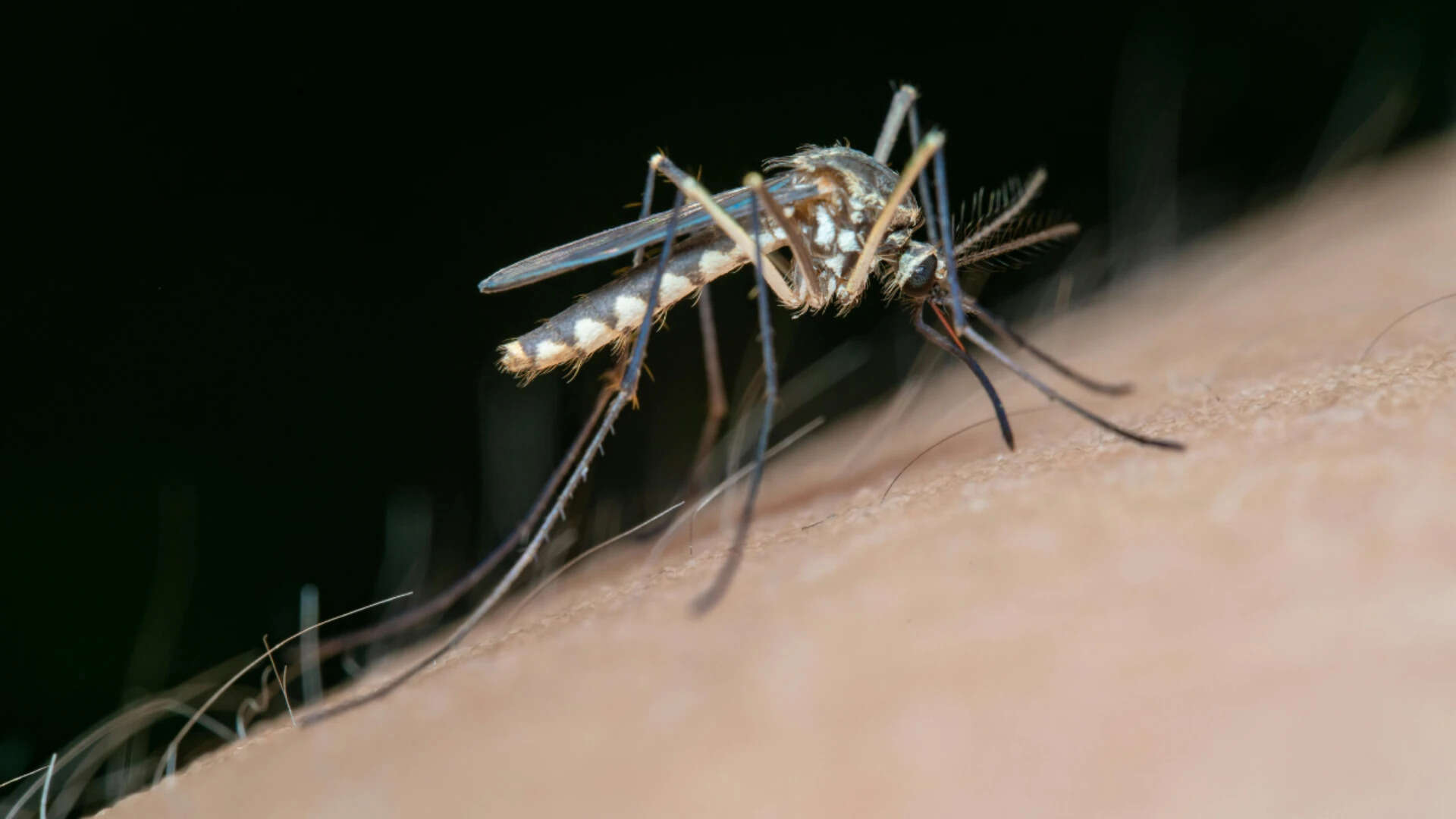
Paying attention to patterns like chills, prolonged fever, and unusual fatigue can help detect serious illnesses early.Image: Canva
When fatigue feels heavier than it should
Fever always brings tiredness. But sometimes, the fatigue feels deeper, almost disproportionate to the illness.This kind of exhaustion can make even simple tasks feel difficult.
Headaches may linger, and the body may feel unusually drained. It is not dramatic enough to alarm, yet not mild enough to ignore.The World Health Organization (WHO) explains that malaria can cause significant fatigue due to its effect on red blood cells and overall energy levels.This is where many people wait it out, hoping rest will fix everything. But the body is often asking for attention, not patience.
The cost of waiting it out
There is a common habit, give it two or three days, and the fever will pass.
For viral infections, this approach often works.But when the fever crosses that window and still holds on, the risk changes.Dr Koppula notes, “A lot of people prefer to give it a few days, assuming it will settle. That’s reasonable for a mild viral illness, but if fever continues beyond two to three days, it’s better to check.”Simple blood tests can detect infections like malaria early. Waiting longer does not make the illness go away, it only gives it more time to settle deeper into the body.
When infections overlap and confuse
Summer and monsoon seasons bring a mix of infections, malaria, dengue, and typhoid. In the beginning, they often look similar.A mild fever. A headache. Body aches.This overlap creates confusion. Treating every fever as viral becomes a shortcut, but a risky one. Recognising the difference early is not always easy, but ignoring the possibility makes it harder.
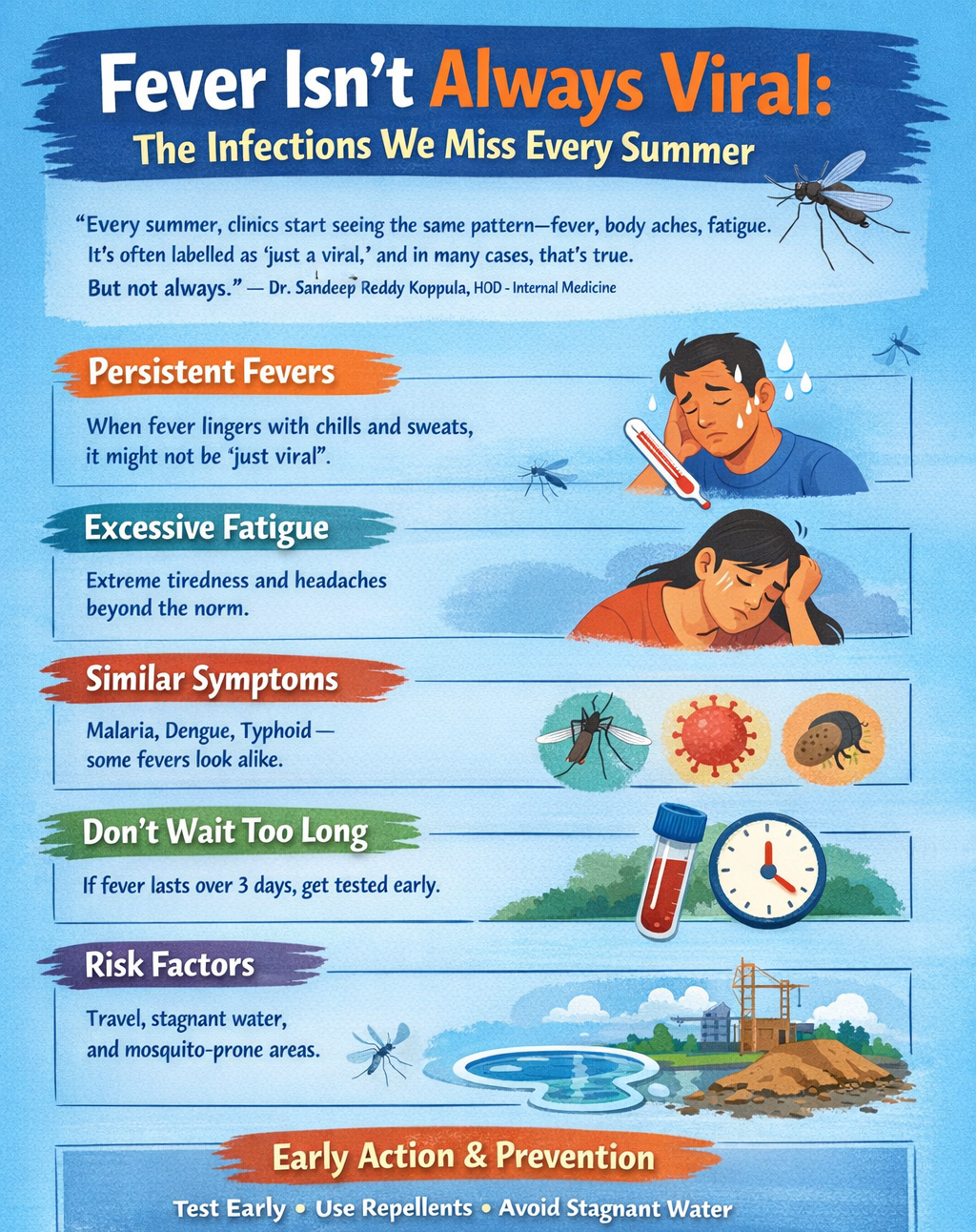
Timely testing and basic precautions can prevent complications and ensure faster recovery.
What should be done, and how to avoid missing it
A small shift in approach can prevent bigger problems. Pay attention to how the fever behaves, not just how high it goes.
Notice patterns, chills, sweating, or recurring spikes. Track how long it lasts.If the fever stretches beyond two to three days, testing is not overreacting—it is being careful.Prevention matters just as much. Avoid stagnant water around living spaces. Use mosquito repellents. Keep surroundings clean, especially during summer and monsoon months.Dr Koppula sums it up well, “Not every fever needs extensive workup on day one.
But not every fever should be assumed to be viral either.”That balance, between panic and neglect, is what protects health.
A small awareness that makes a big difference
Catching the right illness at the right time is that opportunity. Because sometimes, what looks like a simple viral fever is the body asking for a closer look.Medical experts consultedThis article includes expert inputs shared with TOI Health by:Dr Sandeep Reddy Koppula, HOD – Internal Medicine.Inputs were used to explain how to recognise early malaria symptoms behind a persistent fever, and why timely testing and medical attention can help prevent serious complications.