
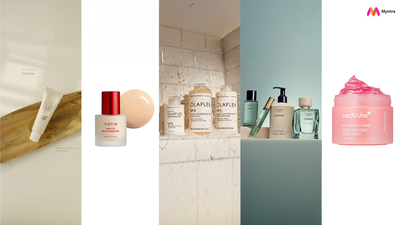
Beauty routines in 2026 look meaningfully different from what they did even two years ago. Consumers are reading ingredient labels, researching actives before purchasing, and increasingly investing in formats that were previously only available in professional or clinical settings.
The shift is less about buying extra and more about buying with intention, understanding what an ingredient does, why a format works, and whether a product genuinely earns its place in a routine. Myntra‘s Glow Up Days, currently live, brings together over 90 K-Beauty brands, 350+ international and luxury labels, and thousands of homegrown names, making it a useful lens through which to understand what consumers are actually reaching for right now.Here are a few standout products from the edit for your reference:
- Niacinamide: The gateway ingredient for skincare beginners and loyalists
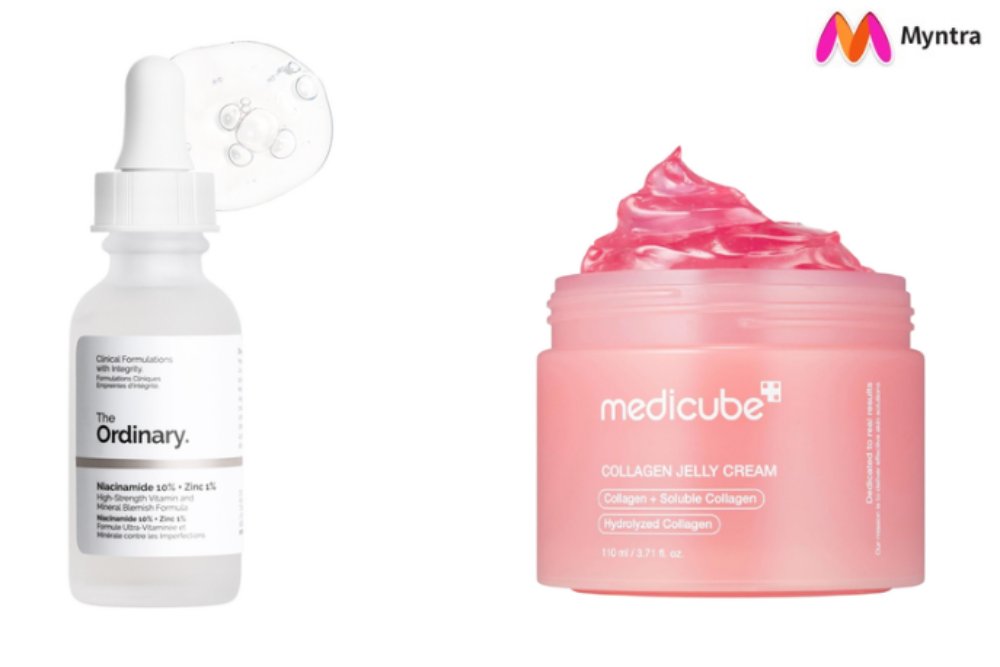
Few ingredients have had as consistent a moment as niacinamide. A form of Vitamin B3, it has become the entry point for consumers first exploring ingredient-led skincare, largely because dermatologists and beauty editors alike have written about its versatility without attaching significant caveats to it. Search interest has remained high for three consecutive years1, and its presence in products across price points has made it one of the most democratised actives in the market. The Ordinary built much of its early reputation on its Niacinamide 10% + Zinc formula, while Medicube’s clinical approach to the ingredient reflects the growing consumer appetite for skincare that borrows from dermatology rather than aesthetics.
- The glass skin trend has moved from aesthetic to methodology
What began as a social media trend, skin so hydrated it looks luminous, has evolved into a structured skincare approach focused on hydration layering, gentle exfoliation, and barrier support. K-beauty brands have led this shift by introducing formats like essences, ampoules, and sleeping masks that were once rare in Western beauty aisles. LANEIGE’s Water Sleeping Mask became something of a cultural reference point for the category. Beauty of Joseon’s Glow Serum, built around rice and propolis, has sustained strong word-of-mouth for its brightening effect.
ETUDE, known for its texture-forward formulations, reflects the more playful, accessible side of K-Beauty that draws in first-time buyers.
- Sunscreen has had a quiet revolution
For years, sunscreen compliance was low, largely because formulations left white casts, felt heavy, or disrupted makeup. K-Beauty brands addressed this more effectively than most Western counterparts, developing textures that sit closer to serums and moisturisers than traditional SPF products. Beauty of Joseon’s Relief Sun, formulated with rice and probiotics, gained significant traction in India over the past two years and is now one of the most reviewed SPF products on domestic beauty platforms. d’Alba’s White Truffle Silky Capsule Sun Cream sits in a similar hybrid territory, part skincare, part sun protection, reflecting a broader consumer preference for products that serve more than one function.
- The ‘skin first’ makeup philosophy is changing what people buy
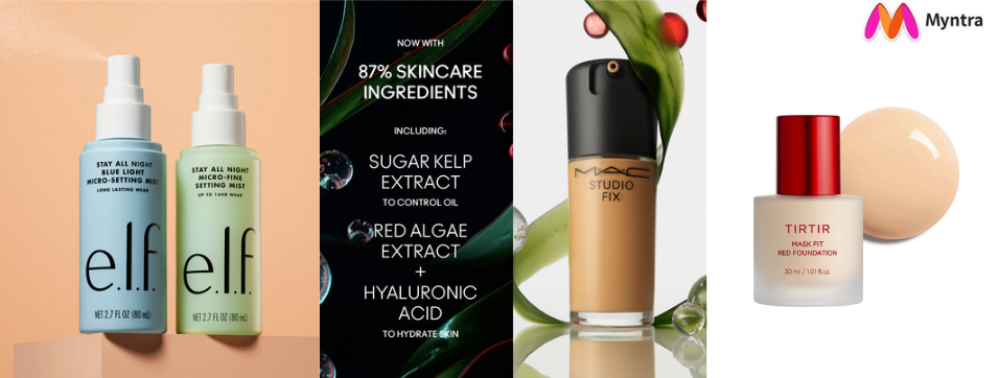
A growing segment of makeup consumers are gravitating towards products that prioritise skin health alongside coverage, foundations with skincare ingredients, primers with barrier-supporting actives, tinted moisturisers over full-coverage formulas. TIR TIR’s Mask Fit Real Cover Foundation is a direct product of this thinking, sitting at the intersection of K-Beauty skincare sensibility and makeup performance. M.A.C’s Studio Fix range remains a benchmark for consistent coverage across skin tones, while e.l.f. Cosmetics, relatively new to the Indian market via Myntra, has built a strong reputation internationally for products, particularly primers and setting sprays, that perform at a fraction of the price of prestige alternatives.
- Estée Lauder and Clinique represent a different kind of consumer conviction
Not all beauty trends are driven by newness. A parallel consumer movement, quieter but equally significant, is the return to clinically tested, long-established formulations. Estée Lauder’s Advanced Night Repair is one of the most studied serums in the prestige skincare category, and its continued relevance across decades speaks to a consumer who values evidence over novelty. Clinique’s dermatologist-developed positioning has similarly maintained traction among consumers who approach skincare with a degree of scepticism towards trend-driven products.
Both brands represent a segment that is growing alongside, not in opposition to, the ingredient-conscious, K-Beauty-influenced mainstream.
- OLAPLEX changed what consumers expect from haircare
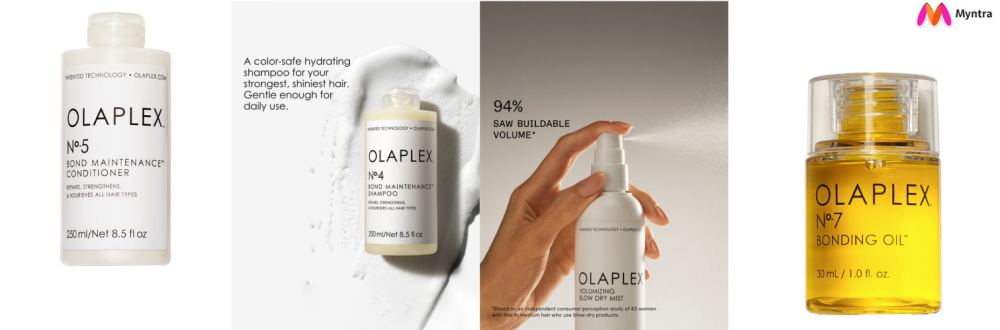
Before OLAPLEX, bond-building technology was largely confined to salon colour treatments. The brand’s decision to bring the same chemistry into an at-home format, particularly with its No.3 Hair Perfector, shifted consumer expectations around what a haircare product could do.
The conversation around hair health has since broadened significantly, with more consumers now researching the difference between coating the hair shaft and repairing it at a structural level.
OLAPLEX’s presence on Myntra reflects a wider shift in the Indian haircare market towards professional-grade solutions that don’t require a salon visit.
- Body care is being treated with the same seriousness as skincare
Body care has historically been the most functional, least considered part of a beauty routine.
That dynamic is shifting, driven partly by social media, partly by a broader wellness sensibility that has consumers paying more attention to ingredients in body washes and scrubs than they did five years ago. LUSH’s positioning around fresh, minimally preserved formulations has attracted consumers who extended their skincare ingredient-consciousness to the body.
Tree Hut’s sugar scrub range has developed a strong following, particularly among younger consumers, for its texture and variety.
Victoria’s Secret’s body care line, spanning mists and lotions, reflects the more indulgent, sensory-led end of the category.
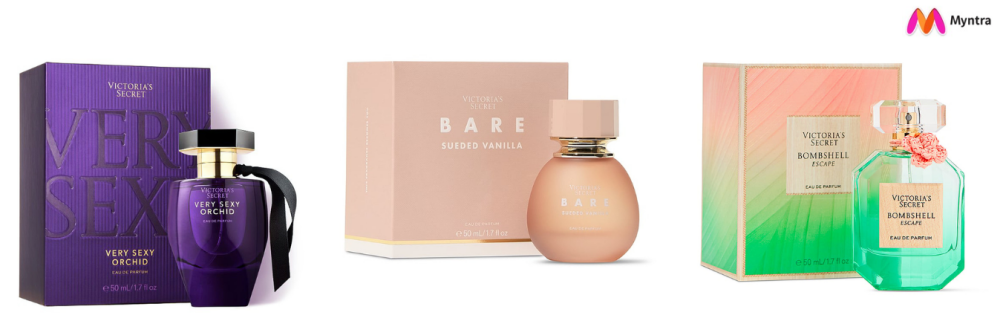
Fragrance is seeing a shift towards layering and personalisation
The idea of a single signature scent is giving way to a more fluid approach, consumers building small fragrance wardrobes, layering body mists with EDPs, or choosing scents by mood rather than identity. This is partly a generational shift and partly a function of greater accessibility to a wider range of fragrances. Myntra’s Glow Up Days brings together a broad range of options across price points and profiles, from Victoria’s Secret’s body mist range to international luxury labels, reflecting a market that is both deepening in sophistication and widening in reach.The bigger picture: Discovery is now part of the routine Perhaps the most significant shift in beauty consumption isn’t about any single ingredient or format, it’s about how consumers are finding products in the first place. The research process has become part of the routine itself, with consumers cross-referencing dermatologist content, peer reviews, and ingredient databases before purchasing. Events like Myntra’s Glow Up Days are increasingly designed around this behaviour, organising products through theme-led discovery journeys rather than simple category listings, helping consumers navigate a market that grows more complex every season.Myntra’s Glow Up Days sale is live now, with 90+ K-Beauty brands, 350+ international and luxury labels, and over 4,500 homegrown brands available across categories.References:
- https://pmc.ncbi.nlm.nih.gov/articles/PMC11977857/
Disclaimer: This article has been produced on behalf of Myntra by Times Internet’s Spotlight team.