
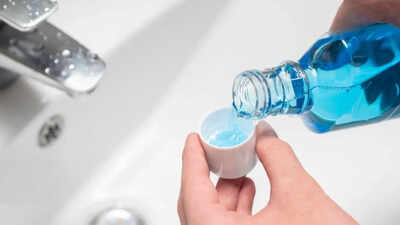
Grab any mouthwash bottle, and you’ll think: fresh breath, fewer germs, and a cleaner mouth. Job done. For years, people swished, spat, and never gave it a second thought. Lately, though, social media’s trying to turn mouthwash into a villain.
The story goes that mouthwash wipes out “good” bacteria in your mouth that your heart actually needs, and that it may drive up your blood pressure or make heart disease more likely.Sounds dramatic, right?But before you toss your mouthwash in the trash, let’s break down what’s true, what’s hype, and what we still don’t really know.
What happens when you use mouthwash?
Here’s what actually happens. The mouth has a whole mix of bacteria: good and bad. The good ones do more than just keep your gums healthy; they help process the nitrates you eat (from veggies like spinach and beetroot) and turn them into nitrite.
When you swallow, your body changes that nitrite into nitric oxide, which we need for normal blood vessel function and healthy blood pressure.So, the idea is: kill off too many good bacteria in your mouth, and you might disrupt this process, which some worry could lead to higher blood pressure.
The link between mouthwash and heart health
Now, there are some studies to back this theory up.One study, with a small group of 19 healthy folks, using strong mouthwash (mainly the kind with chlorhexidine, which is a tough antiseptic that fights infection) for a week or so, showed a little bump in blood pressure and a drop in nitrite levels.
Another study reported that rinsing your mouth twice daily with 0.12% chlorhexidine gluconate mouthwash for one week significantly increased blood pressure in 27 healthy adults.In a third trial of 15 adults who already had high blood pressure, three days of chlorhexidine use further increased blood pressure.But — and this is important — not all mouthwash is created equal. Most people aren’t using these heavy-duty, prescription-level rinses every day.
They’re for special situations, like after dental treatment or if your dentist tells you to use them. Regular grocery-store mouthwashes are usually much milder.When researchers looked at regular, mild mouthwashes, they found that those didn’t mess with nitrate processing nearly as much. Water and gentle mouthwashes let the good bacteria do their job just fine. On the other hand, stuff with strong antibacterial agents, even if it’s not chlorhexidine, like cetylpyridinium chloride, could block some nitrate conversion and lift blood pressure a bit.Alcohol is another ingredient that gets people talking. It’s in a lot of big-name brands, but studies haven’t really teased out what pure alcohol does, since most formulas have a mix of active agents. Some data even raise questions about a possible link between alcohol-based mouthwash and oral cancer, but when it comes to blood pressure or heart health, there’s no clear answer yet.What about real-life data? Turns out, in a long-term study following 354 adults for almost two decades (19 years), sticking to basics (regular brushing and flossing) made a real difference for heart health.
Mouthwash use, on the other hand, didn’t seem to make a dent, good or bad, in the long run. This held true for both mild and strong mouthwashes.Moreover, oral health and untreated infections can also contribute to heart disease more broadly. For example, a systematic review of 82 studies concluded that chronic oral disease and tooth loss were associated with the risk of heart problems. This is why maintaining a healthy balance of mouth bacteria matters beyond your teeth.
Mouthwash: Yay or nay?
So, do you need to panic about mouthwash? The simple answer: not really.But you should check the label and use it wisely. If your mouthwash is alcohol-free and mild, it’s not likely to harm your “good” bacteria or crank up your blood pressure (though it probably doesn’t do much for your heart, either). If it’s something prescribed for gum disease, follow your dentist’s advice, but don’t use it every day forever.The bottom line: your mouth and your heart need a healthy balance of bacteria. Brushing, flossing, and visiting the dentist regularly keep your mouth in shape, and yes, mouthwash has its place, just not as the main event. Focus on the basics, check labels for strong antibacterial agents (especially if you’re worried about your heart), and use mouthwash as your dentist recommends.