

You wake up with a headache. Your heart’s pounding at your desk. You feel exhausted by 3 p.m. even though you slept fine. The logical explanation? Work stress. Your brain’s been running at full speed all week, so obviously your body’s exhausted.
You decide you need better sleep, less coffee, maybe some meditation. You don’t go to the doctor. Why would you? You’re stressed, not sick.Except for that headache, that racing heartbeat, that fatigue, they might not be stressed at all. They might be your body telling you that your blood pressure is dangerously high, and you’ve been misinterpreting the signals for weeks.This is the hidden problem with modern life. We’ve become experts at normalizing physical symptoms that should worry us.
Tension headaches are just what happens when you’re busy. Fatigue is the tax we pay for ambitious work. Palpitations? That’s just anxiety, right? The problem is that high blood pressure, often called the silent killer for good reason, produces exactly those symptoms in its early stages. And because they’re so easily explained away as stress, people don’t get checked.Dr. Mahesh Kumar, Lead Consultant of Internal Medicine at KIMS Hospitals in Bengaluru, has spent years watching this pattern play out.
He’s seen young professionals ignore consistent headaches and fatigue because they assumed it was just work. He’s seen people spend money on supplements and herbal remedies instead of getting their pressure checked. And he’s learned that the difference between catching hypertension early and missing it until complications appear is often just one conversation, one where someone stops assuming and starts asking real questions about what their body’s actually trying to tell them.
In your clinical experience, what’s one case where a patient dismissed symptoms as stress or anxiety—but it turned out to be high BP? What went wrong there?
Dr. Mahesh Kumar: Many patients, especially those in high-pressure jobs, rationalize physical symptoms like tension headaches, palpitations, or lightheadedness as mere byproducts of a busy week or “just stress” My approach to this case highlights a critical diagnostic bridge:The diagnostic gap: By allowing a 10-day window of home monitoring and stress-reduction techniques, I effectively filtered out “White Coat Hypertension” or transient spikes caused by acute situational stress The turning point: When the BP remained consistently above 140/90 mmHg despite those remedial measures, it moved the diagnosis from reactive to essential hypertension .Patient buy-in: The most valuable part of my process was likely the patient’s own involvement.Because he tracked the numbers himself while attempting the lifestyle changes I suggested, he was likely much more receptive to starting medication on day 10 rather than being “forced” into it on day one
Are we over-normalising constant fatigue and headaches as part of “modern life,” and missing early signs of something more serious like hypertension?
Dr. Mahesh Kumar: Yes, fatigue, headache, sleep disturbance and mild irritability are now so commonplace that they have been declared a normal by-product of busyness.
Therefore, a long history of multiple symptoms that have not responded to conventional treatments may be an indication that something is wrong especially when many people have experienced good health until recently or have used these symptoms go unnoticed.
Hypertension is often referred to as being a silent disease, as most of the early signs usually manifest minimally such as having a headache in the morning because you did not get sufficient sleep; fatigue with no apparent cause whilst at work; or simply feeling out-of-sorts.
When symptoms of hypertension have been misattributed to either stress or excessive screen time, the delay in detecting the problem will continue to increase.
How much of a role do lifestyle trends—late nights, high caffeine intake, screen time—play in masking or worsening high BP symptoms?
Dr. Mahesh Kumar: Lifestyle habits can greatly contribute to elevated blood pressure levels and can adversely influence symptom recognition of elevated blood pressure. For example, staying up late can disrupt a person’s natural sleep cycles, which can adversely influence blood pressure regulation and fluctuation patterns.
Caffeine consumption plays several roles in contributing to elevated blood pressure as it can cause temporary increases in blood pressure and it may also mask a person’s feeling of fatigue.
Therefore, while consuming caffeine may allow a person to work longer and stay awake, in doing so, a person may develop long-term health problems or symptoms.
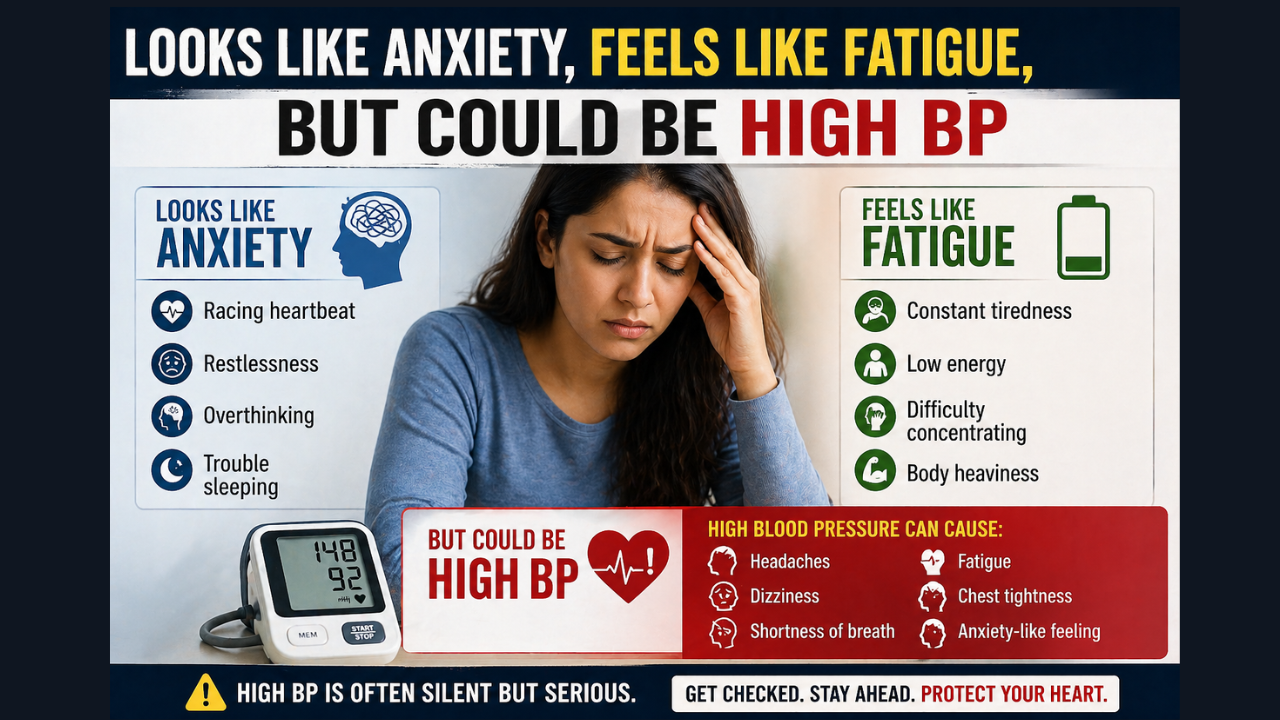
Image: AI
Also, excessive screen time can lead to decreased sleep quality and increased levels of stress hormones, both of which can ultimately lead to increases in blood pressure over time.
The combination of these lifestyle habits not only makes high blood pressure worse, but they also make it hard to differentiate between tiredness (due to lifestyle habits) and symptoms of a medical condition.
Is there a dangerous delay happening because people try to ‘fix’ these symptoms with quick solutions like supplements or home remedies instead of getting checked?
Dr. Mahesh Kumar: Yes, Many people use products such as magnesium, herbal teas, adaptogens and medicines that they can get over the counter with the goal of gaining more energy or reducing stress. While these may do a good job of improving overall health, they are not meant to be substitutes for medical diagnoses. The danger here is that you may feel temporary relief from your symptoms; however, your blood pressure continues to rise in the background! High blood pressure can be found easily using a quick, easy test; however, many people do not get tested.
If someone in their 20s or 30s feels ‘off’ but not seriously ill, what’s your threshold advice—when should they stop guessing and actually see a doctor?
Dr. Mahesh Kumar: If you have been experiencing symptoms for two weeks or more without improvement, do not try to self-diagnose; see your physician for evaluation. You should also see your physician for evaluation if you experience any of the following:
- Frequent headaches (especially upon awakening)
- Ongoing fatigue despite adequate sleep.
- Palpitations/restlessness.
- Irritability/lack of ability to concentrate.
- Family history of hypertension or heart disease.
A brief visit to the doctor can help rule out serious medical concerns that may otherwise be missed until symptoms appear following complications of hypertension, for example. It is better to confirm normal organ function at a doctor visit than to be diagnosed with complications resulting from hypertension after the development of those complications.Medical experts consulted This article includes expert inputs shared with TOI Health by: Dr. Mahesh Kumar, Lead Consultant of Internal Medicine at KIMS Hospitals in BengaluruInputs were used to explain how hypertension symptoms are missed and what are preventive measures.

