
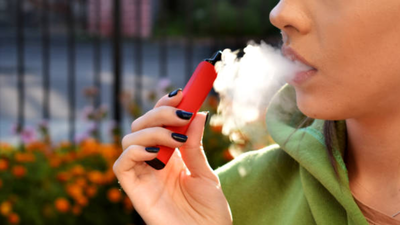
Kayley Boda is 22 years old. She works in retail. She lives in Manchester. And she has been told she has roughly eighteen months left to live, because of a habit she picked up as a teenager, the same way thousands of teenagers pick it up every year.
A vape. Small, disposable, easy to buy, easy to hide. She started at 15. By 22, she had lung cancer, Fox News reported citing news agency SWNS.Kayley had been using reusable vapes since she was a teenager, but things shifted when she switched to disposable ones. A few months after making that change, she started coughing up a brown, grainy mucus, the kind of symptom that sounds alarming enough to send anyone straight to a doctor.
She went. After going eight times in total, she was told it was a chest infection and was sent home. It wasn’t until she started coughing up bright red blood that anyone ordered an X-ray. That’s when they found a shadow on her lower right lung. Over the next four months, she underwent seven biopsies. In August 2025, she was told she had stage one lung cancer. By the time surgeons removed the lower lobe of her right lung, they’d upgraded her diagnosis to stage three, which means the cancer had spread to six surrounding lymph nodes.
She went through chemotherapy. She lost the ability to breathe properly. She had to relearn how to walk. In February 2026, she got the all-clear, and by all accounts it felt like she’d made it. Two months later, extreme chest pain brought her back in. The cancer had returned to the pleural lining of her lungs. Eighteen months. That was the number her oncologist gave her. He also told her this kind of recurrence is something they typically see in patients who are eighty years old.
“The oncologist said this is so rare, and usually something they see in patients that are 80 years old,” she told the media outlet.
What she wants people to hear
Kayley has been very clear about what she believes caused this. There’s no family history of lung cancer. Her symptoms began in the months after she switched to disposable vapes. And while doctors couldn’t pin her cancer to a single definitive cause, they told her that smoking and vaping certainly didn’t help.
She’s stopped completely. She’s made her partner stop. Her mother too. And she’s pleading with anyone who’ll listen to do the same.Vaping was sold to a generation as the safer alternative. Cleaner than cigarettes, less harmful, a step down. What wasn’t part of that conversation — certainly not in the way it needed to be — was that “less studied” is not the same as “safe.” Disposable vapes in particular have come under scrutiny, with some research suggesting they may carry higher levels of certain toxic compounds than standard cigarettes. The long-term data is still catching up, because these products haven’t been around long enough for the full picture to emerge.
But cases like Kayley’s are beginning to fill in the gaps in ways that no marketing claim can easily explain away.