
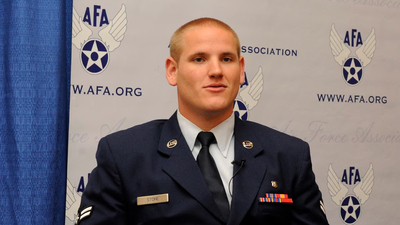
An ordinary high-speed journey through Europe turned into a life-or-death situation aboard a train bound for Paris. On August 21, 2015, among the passengers was Spencer Stone, a young American airman travelling with childhood friends after a holiday across Europe.
As the train moved through northern France, passengers remained unaware that a serious threat was about to emerge inside the carriage.The shift from routine travel to chaos was sudden. Panic spread as a heavily armed attacker appeared, leaving little time to react. Stone did not hesitate or look for an exit. Alongside his friends, he moved toward the danger. Unarmed and outmatched, he made a decision that would later be recognised around the world, stepping in to stop a situation that could have escalated into a far more devastating attack.
How airman Spencer Stone stopped a terrorist on a moving train in France
The incident took place on a Thalys high-speed train travelling from Amsterdam to Paris, carrying more than 500 passengers from multiple countries. The attacker, later identified as Ayoub El Khazzani, had boarded the train armed with an assault rifle, a semi-automatic pistol, and a box cutter, along with a large quantity of ammunition.Shortly after emerging from a restroom, he attempted to initiate an attack. A passenger who first confronted him was shot and injured, triggering panic and confusion in the tightly packed carriage.
With limited space and nowhere to escape at high speed, the situation could have quickly turned catastrophic.Spencer Stone was among the first to react decisively. Travelling with Alek Skarlatos and Anthony Sadler, he immediately moved toward the attacker when the threat became clear.At a critical moment, the attacker’s rifle failed to fire as intended, creating a brief but crucial opportunity. Stone and his companions seized it.
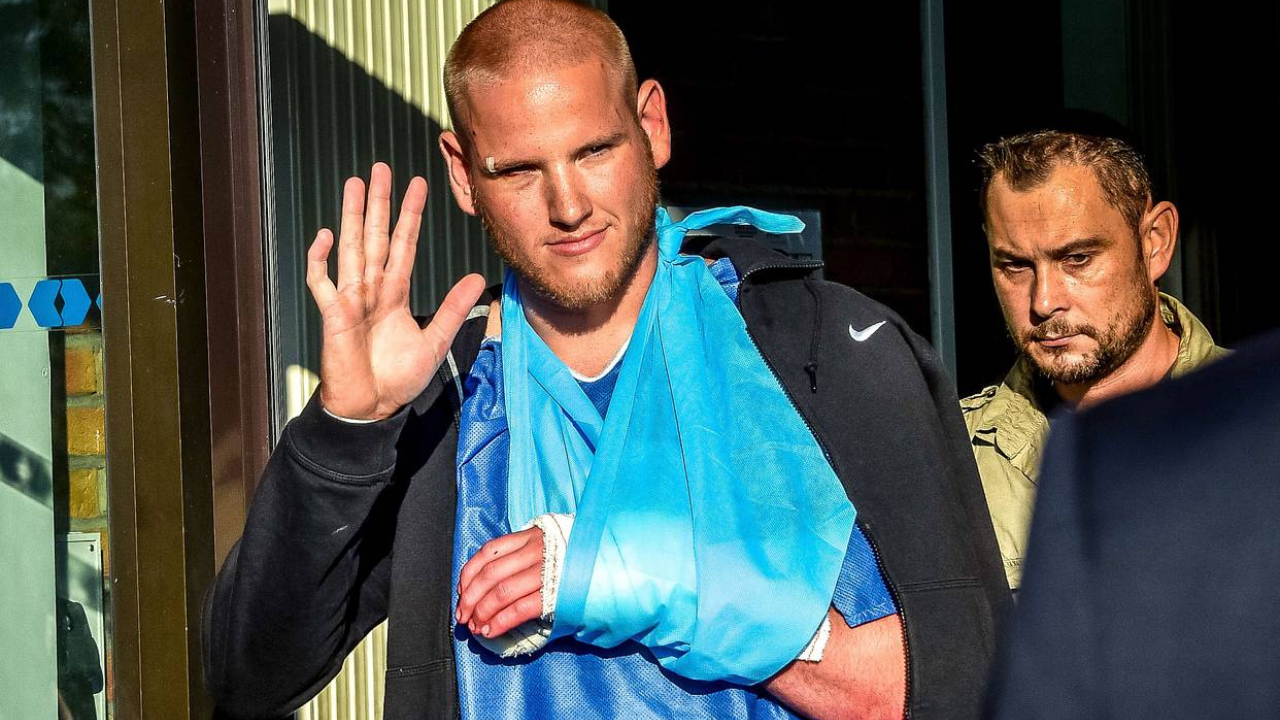
He charged forward and tackled the gunman, initiating a violent struggle in the narrow aisle of the train.During the confrontation, Stone suffered severe injuries. He was slashed in the neck and hand with a box cutter, nearly losing his thumb. Despite significant blood loss, he continued to fight, helping restrain the attacker until others could assist. The combined effort of the group ultimately brought the situation under control.
Injuries, response, and immediate aftermath
Even after the attacker had been subdued, the situation remained critical. Stone, despite his injuries, turned his attention to a wounded passenger, applying pressure to stop bleeding and offering immediate assistance. His training and composure played a crucial role in stabilising the situation before emergency services arrived.The train was diverted to Arras in northern France, where law enforcement and medical teams took over.
The attacker was arrested, and the injured were transported for treatment. What could have unfolded as a mass-casualty event was instead contained within minutes.
Honours and global recognition
The actions of Stone and his friends were quickly recognised at the highest levels. They were awarded France’s highest honour, the Legion of Honour, by then President Francois Hollande in a ceremony that underscored the international significance of their bravery.In the United States, they were also honoured with military awards acknowledging their courage and presence of mind. Their story resonated globally, not only as an act of heroism but as a reminder of how individuals can influence the outcome of critical situations.
From real life to the big screen
The dramatic nature of the event drew attention beyond news coverage. It was later adapted into the film The 15:17 to Paris, directed by Clint Eastwood.
In an unusual decision, Stone and his friends portrayed themselves in the film, bringing a unique authenticity to the retelling.The film focused not only on the attack but also on their upbringing and friendship, offering a broader context to the moment that brought them into the global spotlight.
Watch
THE 15:17 TO PARIS – Official Trailer [HD]
Beyond the attack
In the months following the incident, Stone faced another life-threatening situation when he was stabbed in California during a separate altercation.
He survived the attack, further adding to a narrative of resilience that has come to define his story.He later stepped away from active military service and has largely maintained a lower public profile, though his role in the Thalys train incident continues to be widely recognised.
A moment that defined a lifetime
Calm journeys can descend into situations that demand extraordinary presence of mind and resolve. The Thalys train attack stands as a testament to the power of instinct, discipline, and courage when chaos strikes. For Spencer Stone, the choice to act was not driven by a desire for recognition, but by a deep sense of duty in a moment that demanded nothing less than immediate resolve. In those decisive seconds, his bravery helped avert a far greater tragedy and left an enduring mark on everyone aboard the train.
His conduct reflects a defining truth about the finest soldiers: a soldier is never truly off duty.