
Unification of all natural forces in a single theory of everything has been the dream of physicists for many years now. While Albert Einstein attempted this through his Unified Field Theory, many have tried this through quantum mechanics theories.
However, according to the latest thoughts among some of the best physicists out there, what holds us back from achieving this dream might not be mathematics but our very existence on this planet. According to experts, our survival on this planet might be in doubt in the coming years.
Understanding the challenge of unifying fundamental forces in physics
Ultimately, physics endeavours to understand the universe in terms of four basic forces: gravity, electromagnetism, strong nuclear force, and weak nuclear force.
Although three of these forces have been satisfactorily modelled using the Standard Model, gravity has remained a stumbling block because it has yet to be included in any quantum models. In this context, unified field theory can provide a solution.According to the literature on the Unified Theory, this theory should “account for all the fundamental forces… in one theoretical structure.” Unfortunately, it seems that physicists cannot achieve this goal since there are numerous technical barriers involved in doing so.
‘The chances of you living 50 years are very small’: Why the physicist says so
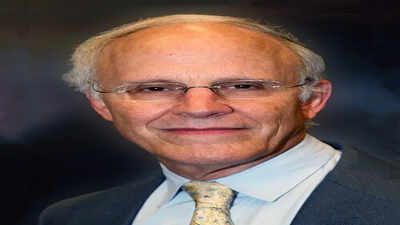
During a recent debate, however, the famous physicist David Gross, who has received the Nobel Prize, warned of the danger that mankind might be extinct before reaching such a discovery. In other words, he argued that the “chances of you living 50 years are very small” due to numerous threats that civilisation faces today.Interestingly, a similar viewpoint was expressed by Martin Rees, a cosmologist, in Our Final Hour, who predicted that there are only 50% chances that mankind will survive until the end of the 21st century because of numerous dangers.It becomes clear then that scientific discoveries are impossible without the stable existence of human civilisation for many years ahead.
Existential risks vs Scientific ambition
Thus, the problem lies in two directions. Firstly, scientists strive to go further and research new areas like string theory and quantum gravity. Secondly, there are many threats facing our planet and humanity, including environmental destruction, wars, nuclear weapons, and advanced technologies.According to the Christian Physicist Society, even Stephen Hawking, the world-famous scientist, expressed concern regarding the survival of mankind, suggesting that humans could not live longer than 1000 years without leaving their planet.Thus, the connection between the future of humanity and the future of science becomes obvious: unless global problems are solved, the unified theory could become merely a fiction.
A race against time
The search for a grand unified theory of everything has been referred to as the highest intellectual goal.
However, according to leading physicists, the true competition might not be one against scientific complexities but rather against time.Should mankind succeed in overcoming its present difficulties, it would reap unparalleled benefits, including the discovery of reality, the origin of the universe, and man’s position therein. On the other hand, should they fail, all that the universe holds in secrets may forever remain inaccessible to us.Ultimately, the issue is not whether we can unify the four forces of nature but whether we have enough time to attempt doing so.