
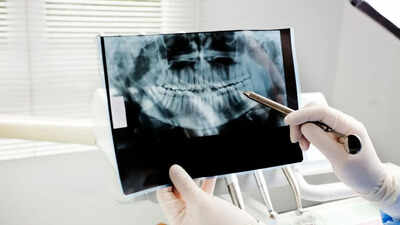
Oral cancer often begins subtly, with persistent mouth ulcers and painless white or red patches being easily overlooked. Experts warn that changes in chewing, swallowing, voice, or unusual mouth sensations, even if minor, demand medical attention. Early detection through regular dental check-ups is vital for improved survival rates, yet awareness remains a significant challenge across India.
A mouth ulcer feels like a minor inconvenience. It stings for a few days, then fades away. But sometimes, it doesn’t. And that is where the story changes.In India, oral cancer continues to be one of the most common cancers.
It hides in plain sight. What makes it dangerous is not just the disease, but how it begins. Early signs are easy to ignore because they rarely hurt.
Life gets busy, and small discomforts are brushed aside.But what if that harmless-looking ulcer is actually trying to say something important?
Watch
Oral Cancer And What Causes It
A persistent ulcer that refuses to heal
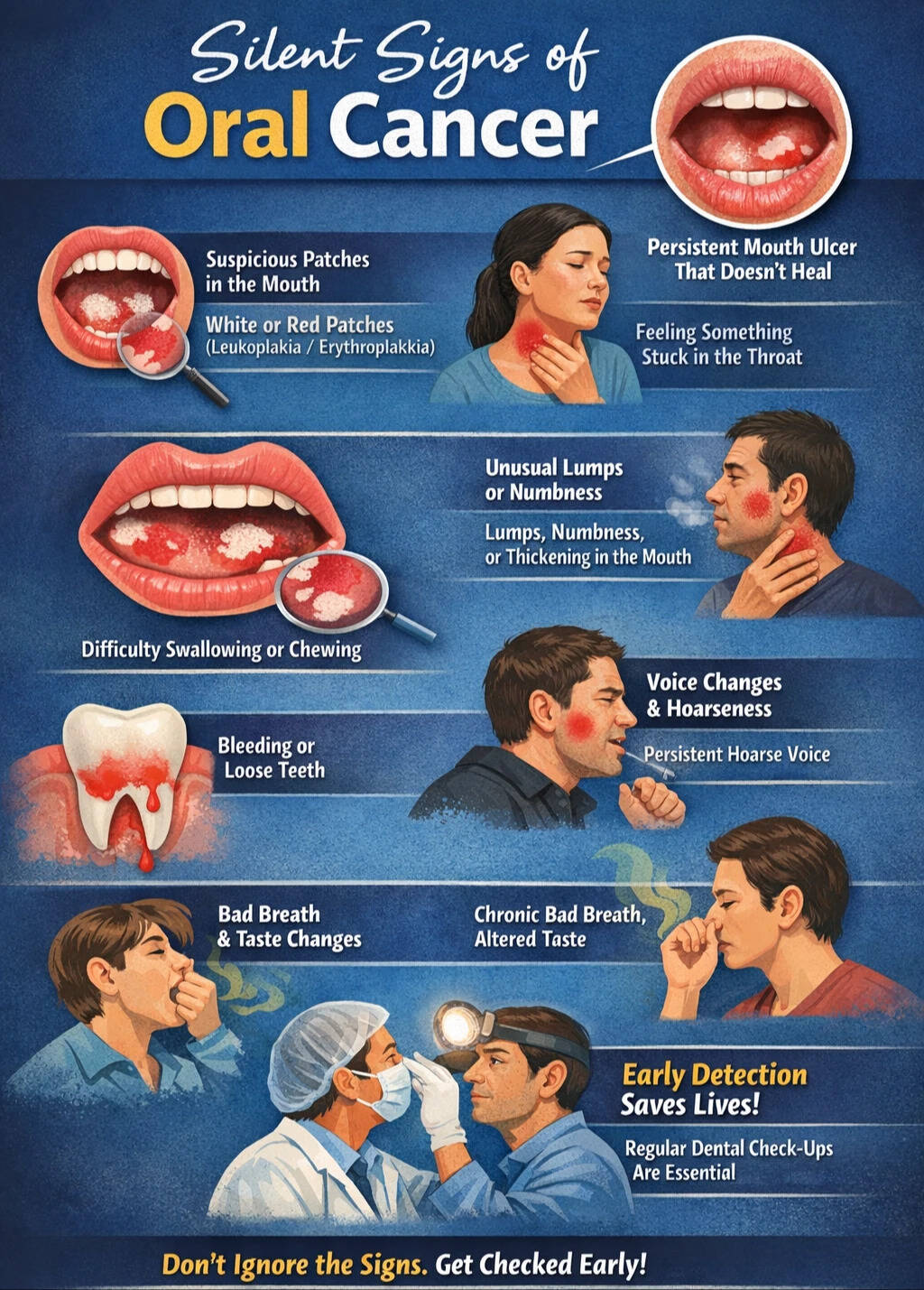
Most people have had mouth ulcers at some point. They usually clear up within a week or two. The problem begins when they don’t.Dr Tushar Patil, Senior Cancer Physician at M|O|C Pune, explains, “A classic mouth ulcer that fails to clear up in a period of two to three weeks is one of the most frequently overlooked early symptoms.”This delay happens because the ulcer does not cause severe pain. It feels manageable. But time matters here. An ulcer that stays beyond two weeks needs medical attention, not guesswork.According to a study published in the NIH, early detection can significantly improve survival rates.
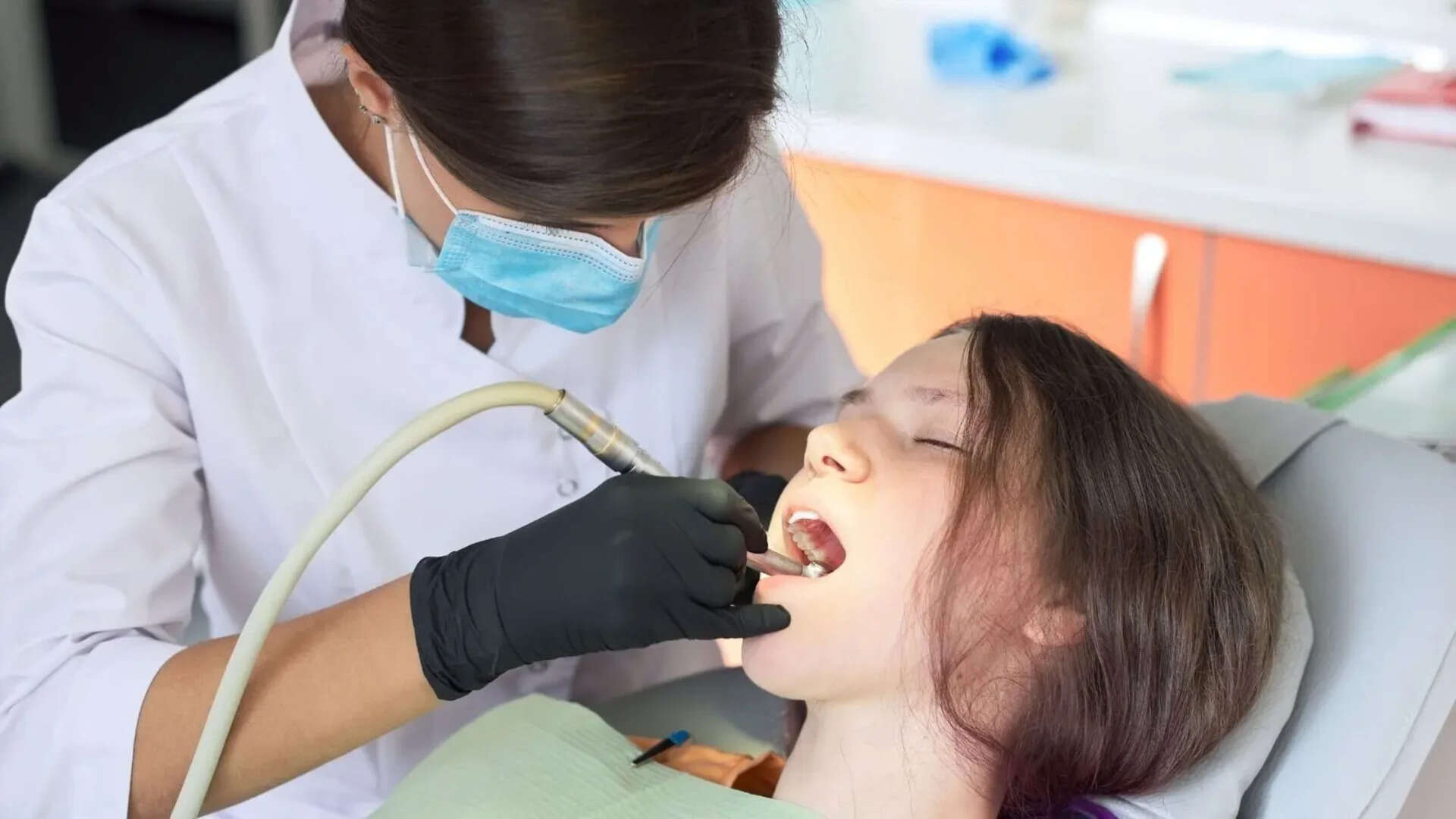
Oral cancer often begins quietly, without pain. Recognising early signs like persistent ulcers, patches, difficulty in swallowing, or numbness can lead to timely diagnosis.
The silent patches people rarely notice
Inside the mouth, changes can happen quietly. White or red patches may appear and go unnoticed.Dr Patil notes, “White or reddish spots (leukoplakia or erythroplakia) in the inside of the mouth are usually painless and unnoticeable until it develops.”
These patches do not always hurt. They do not interfere with eating at first. So they are ignored. But these can be early warning signs that need a closer look.Many people only discover them during a dental visit, often by chance.
When eating or swallowing starts to feel different
A slight discomfort while chewing or swallowing may seem like a temporary issue. Maybe it feels like a throat infection or a dental problem.But it could be more.Dr Patil highlights, “Trouble swallowing or chewing is another symptom that patients do not pay close attention to.”This change is subtle at first. Food may feel like it gets stuck. There may be a mild irritation that comes and goes. Over time, it becomes harder to ignore.Listening to these small changes can make a big difference.
Unusual sensations that don’t add up
The mouth is sensitive. So when something feels off, it deserves attention.Dr Abbasali Rangwala, Endodontist and Implantologist at Saifee Hospital, shares, “Pain, tenderness or numbness anywhere in the mouth or lips… development of a lump, leathery wrinkle patch inside the mouth… difficulties in chewing, swallowing, speaking or moving the jaw or tongue.”These symptoms may not always be intense. A slight numbness. A small lump. A strange thickness in the cheek. They are easy to dismiss.But these are signals. And the body rarely sends signals without a reason.
Changes in voice, teeth, and everyday comfort
Some signs do not even feel related to the mouth at first.Dr Patil points out, “There are often voice changes and long-standing hoarseness, particularly in smokers, which are accepted and not explored.”Other changes include unexplained bleeding, loose teeth without gum disease, or numbness in the lips and tongue.Dr Rangwala adds, “Bad breath, stained teeth and tongue, diminish sense of taste and smell… gum disease and sensitivity.”These symptoms get linked to lifestyle or hygiene. But when they persist, they need attention beyond home remedies.
Regular dental check-ups play a key role in catching these early changes and improving outcomes.
Why regular check-ups quietly save lives
Early detection is not complicated. In many cases, it does not need advanced technology.Dr Patil emphasises, “The most important factor that can help patients to live longer is the early detection.”Regular dental visits can spot changes that are easy to miss at home.Dr Rangwala explains, “Regular dental care and check up can help in detect pre cancer lesions, give early diagnosis and treatment, counsel against bad habits and avoid cancer causing agents.”In simple terms, a routine check-up can catch what the mirror cannot.A study from NIH has highlighted the burden of oral cancer and the need for early screening.
Awareness is still the missing link
One of the biggest challenges is not treatment, but awareness.Dr Patil notes, “Its awareness among the population is still a problem, especially in rural and semi-urban India.”Many people do not have easy access to screening. Others do not know what to look for. And some delay visits out of fear or habit.But awareness changes outcomes. Knowing what to watch for can turn a late diagnosis into an early one.Medical experts consultedThis article includes expert inputs shared with TOI Health by:Dr Tushar Patil, the Senior Cancer Physician at M|O|C Pune.Dr Abbasali Rangwala, MDS DNB Endodontist and Implantologist, Saifee Hospital.Inputs highlight that seemingly harmless symptoms like persistent mouth ulcers and oral changes are often ignored, and experts stress that timely medical consultation and regular dental check-ups are crucial for early detection of oral cancer.