
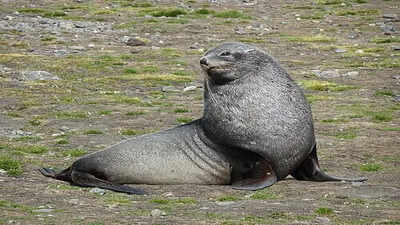
Under the ice in Antarctica’s silent world, an outstanding performer lives. One of the rarest and least studied seals in the world, the Ross seal makes noises so extraordinary that some experts describe them as resembling “science fiction” sound effects and “electronic music.
” Instead of making the typical bark and growl noises heard from other types of seals, this species generates sounds that mimic the “zap zap” noises made by lasers, as well as singing and trilling sounds. This unique noise has been heard under sea ice, but what makes this all the more fascinating is that it plays an important role in vital behaviours.
Scientific research on Antarctic Seal synthesiser vocalisations
It is known from the history of polar exploration conducted over many years by organisations like the National Science Foundation and the British Antarctic Survey that the distinctive vocalisations of the Ross seal have been well documented. Initial recordings demonstrated a wide variety of vocalisations, including whistles, chirps, and siren-type sounds. From scientific literature, it is clear that “Underwater soundscape in Seaview Bay, Antarctica, and triple ascending trill of the leopard seal (Hydrurga leptonyx) underwater vocalisations,” experts in marine mammal sounds, concluded that the evolution of such diverse vocalisations must have been necessary for efficient communication in highly turbid water bodies covered with ice. For example, in one scientific study, the vocalisation of the Ross seal was characterised as “highly structured sequences that resemble artificially generated tones,” demonstrating unique acoustic characteristics.
Why the Ross Seal sounds like a synthesiser
This synthesiser-like nature of the Ross seal’s call is no coincidence. Sound travels differently in the waters surrounding the poles due to its ability to travel extremely long distances without being distorted. The anatomy of the Ross seal enables the animal to generate fast frequency modulations much like the electronic oscillations produced for sound effects in music composition.These vocalisations could serve as identification signals between animals spread over large polar ice fields.
Furthermore, the rhythmic nature of the calls may function as a means of communication during the mating process, with complex calls perhaps being attractive to mates. As one researcher puts it, “acoustic signalling in ice-covered waters is important for survival and reproduction.”
The importance of studying Antarctic Marine life
However, the knowledge of the specific vocalisations of the Ross seal will bring something else aside from pure interest, knowledge about adaptations of species to harsh climatic conditions. As it is known, the Antarctic region undergoes changes due to global warming, and studying such species as the Ross seal will help better comprehend what happens in the polar zone nowadays and in the future.Thus, studying Ross seals’ acoustic features helps monitor climatic changes in the environment.If you wish to read more about the topic, here are links to the original sources and in an age when nature tends to amaze people with its diversity, the Ross seal deserves attention as an example of an unusual adaptation. Moreover, this species produces songs that resemble sounds typical of outer space and not of the cold environment of Antarctica.

