

In an age dominated by social media, men are increasingly engaged in ‘looksmaxxing’—a phenomenon driven by societal expectations and the allure of dating apps. While enhancing one’s grooming and fitness can lead to greater self-esteem, this fixation on external appearances poses risks of obsession, body image issues, and an unhealthy association between looks and self-worth.
Scroll through any social media feed today, and a pattern shows up quickly. Men are working on their looks with almost scientific precision. Jawlines are analysed, skin routines are followed like rituals, and gym bodies are treated as projects.
This growing trend is often called “looksmaxxing.”At its core, it sells a simple idea: if a man improves how he looks, his life will improve too. Better confidence, better dating life, even better career outcomes.But does it really work that way? Or does the chase for a “perfect look” come with a cost that people don’t talk about enough?
What exactly is “looksmaxxing”?
Looksmaxxing is a self-improvement trend focused entirely on physical appearance.
It started in online forums but has now moved into mainstream spaces like Instagram and YouTube.In simple terms, it means doing everything possible to improve how one looks. This can include:
Skincare routines and grooming habits- Weight loss or muscle building
- Hairstyling, beard shaping, fashion upgrades
- Dental work, posture correction
- In extreme cases, cosmetic procedures
Some followers even break it into two types:
- Soft looksmaxxing (natural improvements like grooming and fitness)
- Hard looksmaxxing (surgery or drastic changes)
The idea sounds practical on the surface. After all, taking care of one’s body is not a bad thing. But the mindset behind it often goes deeper.
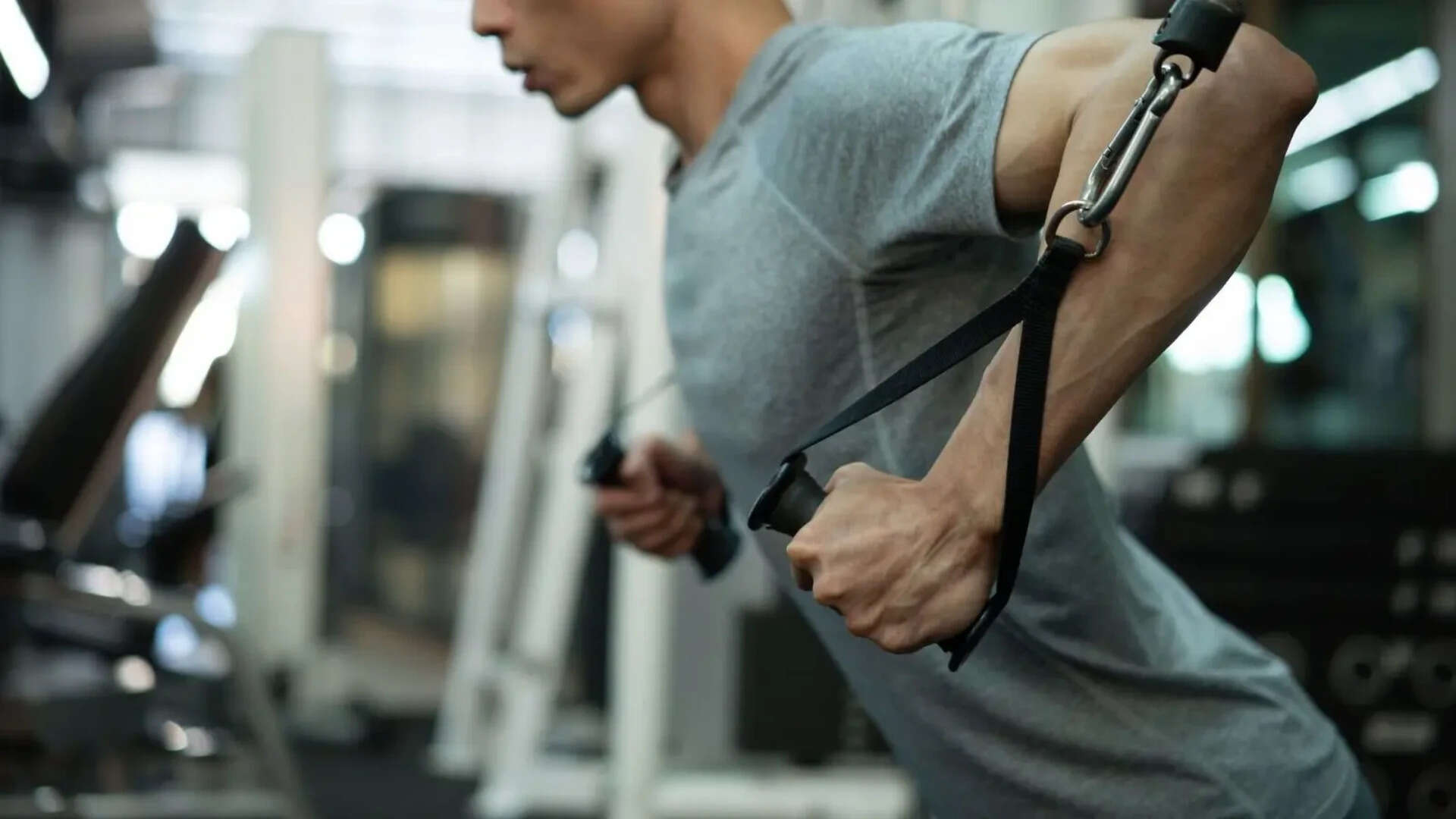
While it can boost confidence and encourage healthy habits, it also carries risks like anxiety, comparison, and low self-worth.
Why are so many men drawn to it?
There is a quiet shift happening in how society views male appearance.
For decades, the pressure to “look perfect” was largely placed on women. That gap is closing.Social media has accelerated this change. Algorithms reward conventionally attractive faces. Dating apps turn appearance into a first filter. And suddenly, men are also being judged in ways they weren’t before.A report by the NIH has shown how social media use is linked to body image concerns, especially among younger users. So, looksmaxxing becomes less about vanity and more about coping. It offers a sense of control in a world where appearance seems to matter more than ever.
Does improving your looks actually help?
In some ways, yes. There are real, measurable benefits to taking care of appearance.
- Grooming and fitness can boost confidence
- Healthy habits improve energy and overall well-being
- Good posture and dressing well can influence first impressions
Psychologists often refer to something called the “halo effect.” People tend to assume that attractive individuals are more capable, friendly, or trustworthy.Many people chasing looksmaxxing are actually chasing a level of confidence.But here’s the catch: confidence built only on appearance can be fragile. If it depends on how one looks on a given day, it can disappear just as quickly.
The hidden downsides no one talks about
This is where things get complicated.Looksmaxxing can sometimes turn into obsession. Instead of improving life, it can start controlling it.
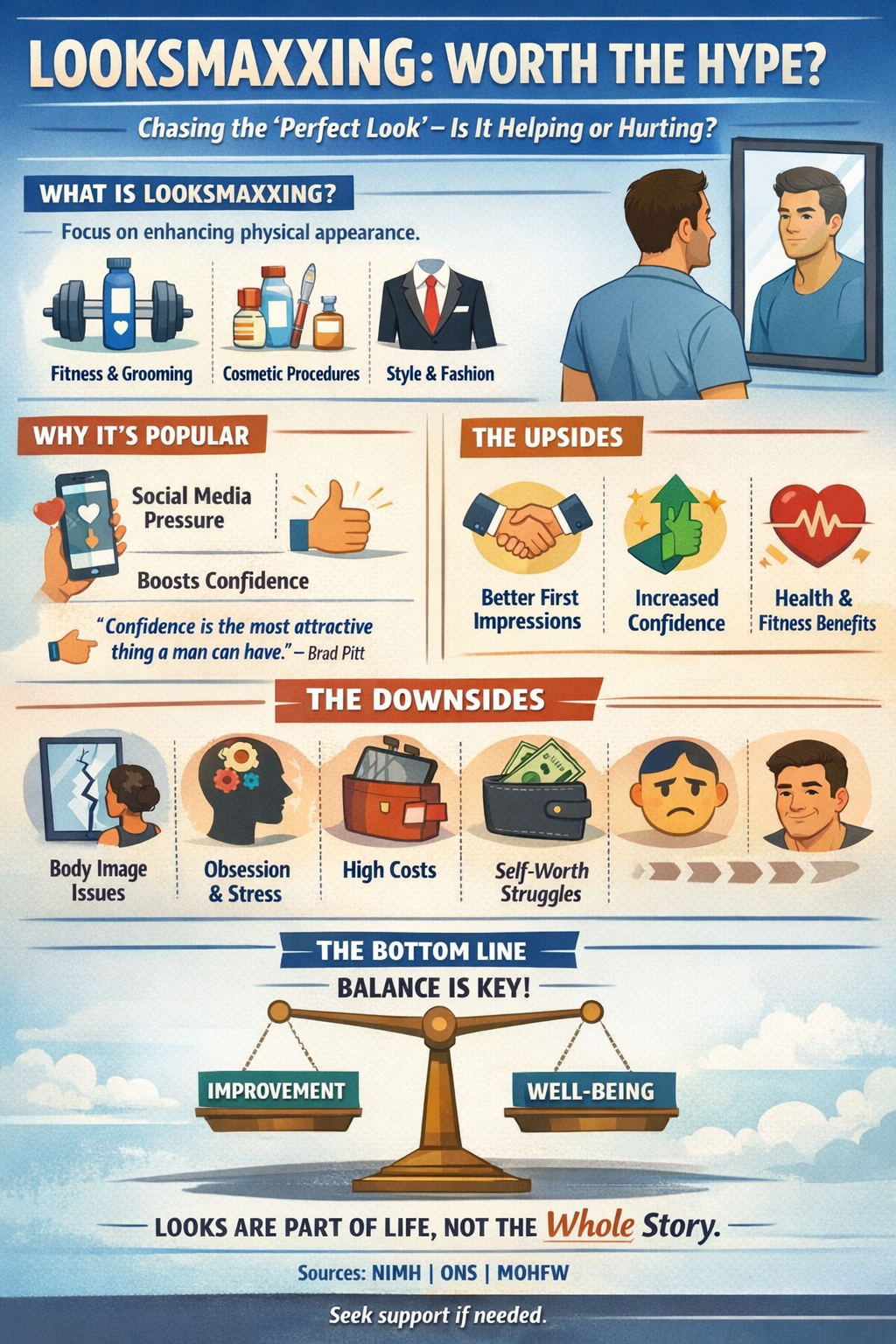
The key lies in balance—self-improvement should support well-being, not replace it.
Some common risks include:
- Constant comparison with unrealistic standards
- Body dysmorphia (seeing flaws that others don’t notice)
- Anxiety around ageing or minor imperfections
- Overspending on products or procedures
- Linking self-worth only to appearance
The National Institute of Mental Health (NIMH), USA, explains how body image issues can lead to deeper mental health struggles. Many men don’t openly talk about these struggles, which makes it harder to recognise when things go too far.
When self-improvement becomes self-pressure
There is a thin line between self-care and self-criticism. Looksmaxxing often starts with motivation: “I want to be better.” But over time, it can shift into: “I am not good enough.” That shift is subtle, but powerful.Fitness becomes punishment instead of health. Skincare becomes stress instead of care. Mirrors stop reflecting reality and start reflecting doubt.
So, is it worth it?
The answer is not black and white.Looksmaxxing, in its healthy form, is simply self-care. Eating well, staying active, dressing neatly, and taking care of hygiene are all positive steps.But when the goal becomes perfection, the process often becomes exhausting.The real value lies in balance. Improving appearance can open doors, but it cannot sustain happiness. Personality, skills, emotional stability, and relationships still matter far more in the long run.So, does chasing the “perfect look” pay off?Only if the chase does not cost peace of mind.Disclaimer: This article is for informational purposes only. It does not replace professional medical or psychological advice. Anyone experiencing body image concerns or mental health issues should consult a qualified healthcare professional.