
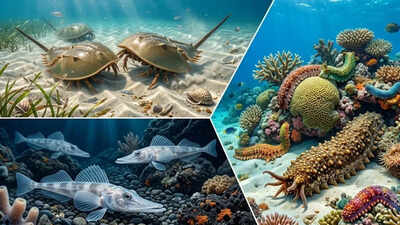
Although we think of blood as a bright red liquid contained in human veins, it has a wide variety of characteristics around the globe in the natural world. Different animal species have developed many different physiological adaptations throughout the ages that allow them to create blood that is not haemoglobin-based, as nearly all other vertebrates create.
Think of the amazing lime-green veins of the skinks in New Guinea, the stunning bright blue circulatory systems of octopuses or the clear plasma of the Antarctic icefish; these animals have all adapted to successfully survive in extreme environments of nature. With the use of alternative proteins and unique pigmentation of their blood, these six amazing animals exemplify the diversity of evolutionary design, where the life-giving fluid of life, blood, can be found in as many different colours as there is life on Earth.Sea CucumbersGlobally, some echinoderms are sea cucumbers found in every ocean. Some species of sea cucumber do possess haemoglobin; however, others have different colours of fluids within them depending on their environment and their metabolic activity. A sea cucumber’s physiological make-up allows it to live on the ocean floor, where it scavenges for organic material with specially adapted tube feet.New Guinea’s Green-blooded SkinksDue to their exceptionally high amounts of the bile pigment biliverdin, these unique lizards have developed lime green blood over time.
They have developed adaptations that allow them to tolerate the levels of this pigment, which would be toxic to other vertebrates, but they do not appear to suffer any adverse effects. Therefore, this represents an extraordinary evolutionary adaptation to aid in the management of metabolic wastes.Crocodile IcefishThese are the first vertebrates that are known to live in the frigid waters of Antarctica that do not have any functional haemoglobin or red blood cells.
They extract the high oxygen concentration in cold water by taking oxygen directly from their plasma into their plasma to support their metabolic processes.OctopusesOctopuses utilise hemocyanin (a copper-based protein) as their means of transporting oxygen through their circulatory systems, thereby giving them the unique blue colour of blood. Hemocyanin, being much more efficient than haemoglobin in a cold deep-ocean environment with limited oxygen concentrations, allows octopuses to thrive where haemoglobin would have been less effective.Horseshoe CrabsThese ancient sea-dwelling arthropods contain blue-colored blood that is rich in copper through a protein called hemocyanin. Instead of using the more well-known white blood cells to fight infection, ancient sea-dwelling arthropods have a type of cell (called an amoebocyte) that responds to bacteria by clumping around them to form a protective barrier. The specific biological mechanism of defence used by ancient sea-dwelling arthropods is essential to their immune systems and has become extremely important for the purposes of modern biomedical contamination testing.BrachiopodsBrachiopods are marine invertebrates that transport oxygen with the iron-containing respiratory pigment hemerythrin. Hemerythrin is colourless to pale yellow when not in contact with oxygen; however, it turns a distinct purple to pinkish colour when bonded to oxygen in the circulating fluid of the brachiopod.

