
Dr Subodh Kerkar directs a team of dancers in Tajpur. “When I work with the ocean in Goa, I usually team up with fishermen or labourers from Bengal. This time I got to work with dancers and their energy was infectious,” he said
If there’s one thing that defines Hooligaanism’s music videos, it is their instinct for layered storytelling. Whether it was the viral Melar Gaan or Prithibita Bhalo Lokeder Noy, their work has always carried a strong musical spine wrapped in striking, often unexpected visual language. Now Bhalobashar Desh arrives with the tides.A burning boat drifts into view. A coastline reshapes itself with the rhythm of absence and return. Chau dancers move as living installations, their bodies turning into symbols, gestures becoming language.At the heart of this musical is Dr Subodh Kerkar, the Goa-based contemporary artist revered globally for his large-scale performance installations that sit at the intersection of ecology, memory, politics and identity. Bhalobashar Desh marks his first collaboration on a music video, one that expands the grammar of the form.In a conversation with CT, the team – director Riddhi Sen, cinematographer Ishaan Ghosh, producer and band frontman Anirban Bhattacharya, and Kerkar – revisit the making of the project.
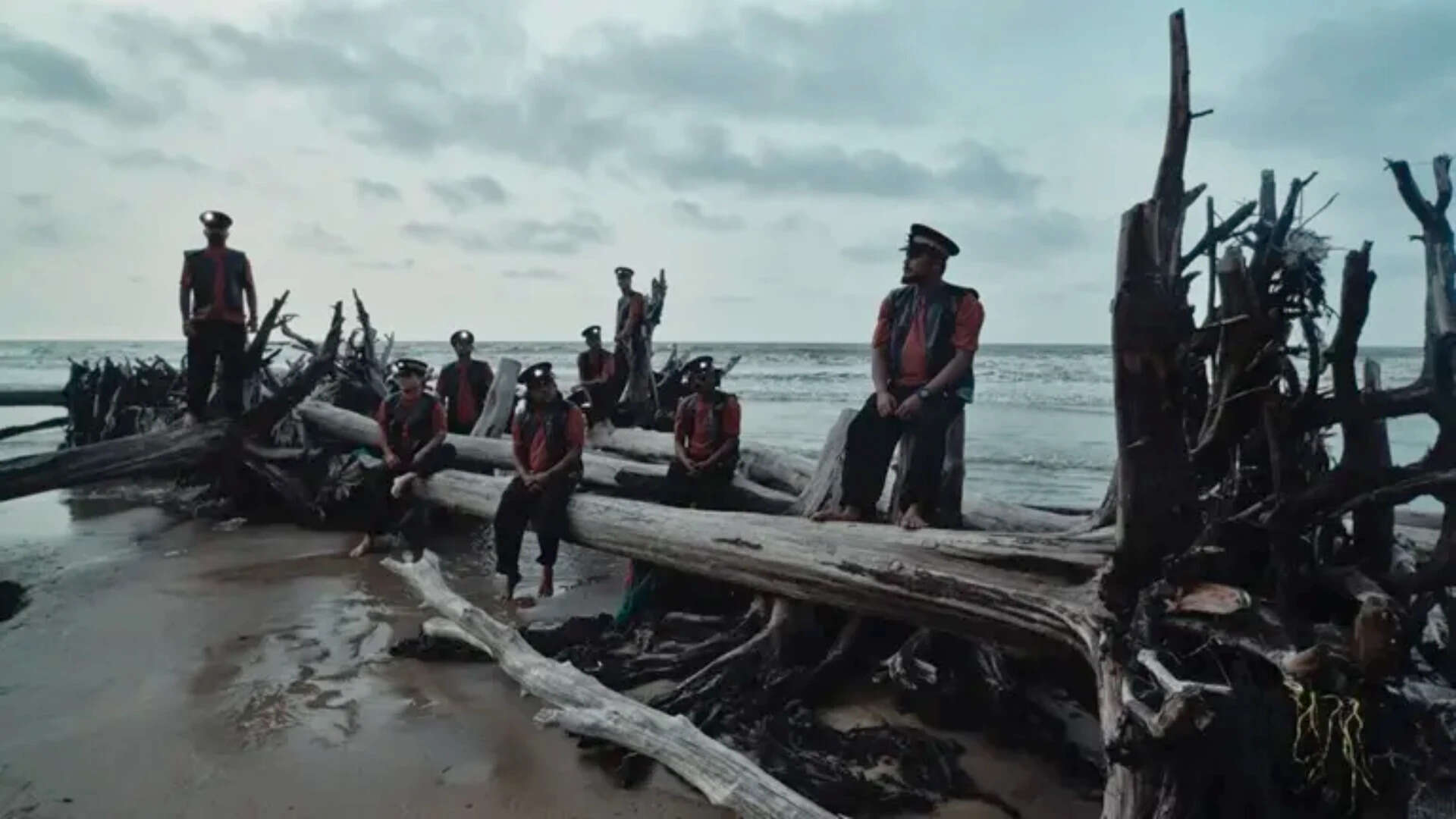
Hooligaanism members in a still from the video
We understand the Bhalobashar Desh video draws inspiration from your Ocean Odyssey project. What drew you to collaborate with this group?Kerkar: A few months ago, I was actually considering creating a music video.
This was because AR Rahman had liked some of my work on Instagram, and I thought perhaps we could collaborate. That hasn’t happened yet, but coincidentally, I got a call about this project. When it was explained to me, I found that philosophically and politically, it aligned with my convictions.I strongly believe that an artist has to be political. If you are not political, you are not an artist at all. Artists are receptors and transmitters of ideas in society.
Whatever you create reflects your experiences.If there is a war happening, you cannot sit in your studio and paint flowers without responding to it. Today, both nationally and internationally, we are seeing deep polarisation –religion, race, identity. The universal language of art, with its foundation in liberal thought, empathy and human connections, has the power to bring people together.
The way the song has been visualised makes it feel universal rather than tied to a specific place or time. The powerful imagery of the graves and the children that came from Riddhi can evoke what’s happening in Iran or other war zones.
Dr Subodh Kerkar
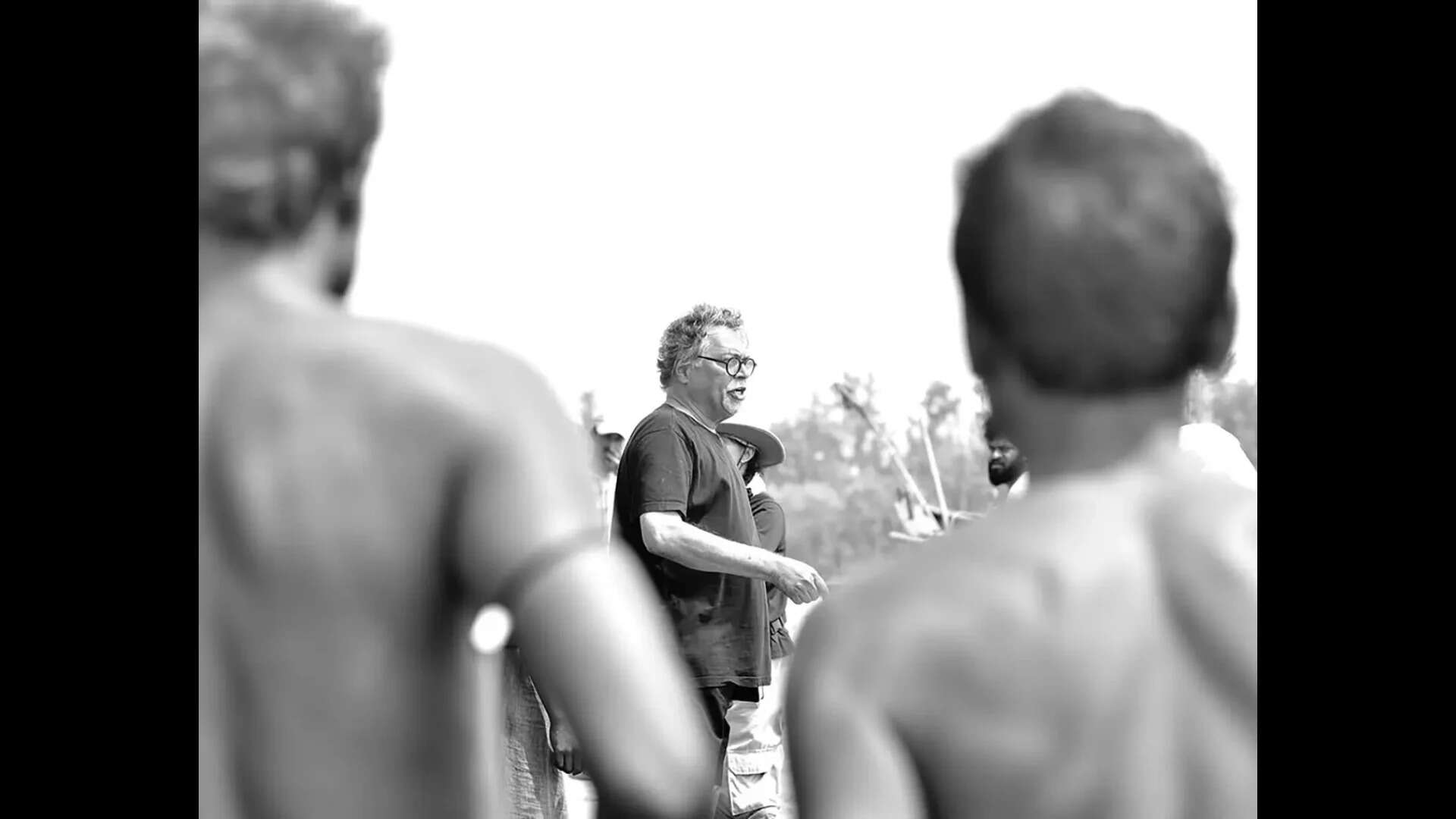
Dr Subodh Kerkar
Riddhi, was Ocean Odyssey a direct reference point, or were there other ideas that led you to this visual language?Riddhi: I’ve been a huge admirer of sir’s work – his performances, installations, sculptures, and paintings.
When I began working on this project, I explored his work more deeply and was amazed by the scale and imagination behind it.The way he interprets how civilisations are born near water is incredibly compelling.We struggled with how to represent India visually. It’s such a vast country – if you show mountains, you miss forests; if you show forests, you miss the sea. And with limited budgets, we couldn’t travel everywhere.That’s when I thought of Sir’s work. His visual language allowed people themselves to become the landscape – mountains, rivers, movement. In a single frame, through human formations, you could evoke geography and diversity. That felt perfect.Also, as sir mentioned, this work transcends India. It can belong anywhere in the world.
With the band, every song has been very different. This time, we wanted to create something centered on love – on the idea that the strength of the country lies in its diversity.
Riddhi Sen
Anirban: We’ve also been thinking about scale for a while now. Melar Gaan travelled, people connected with it. But as actors, filmmakers and theatre professionals, we always have this urge to push further – to make something bigger, more expansive in thought and form.The process itself took time – five to six months of building, thinking, reaching out. Riddhi actually found sir through Instagram, connected with him, and from there this entire collaboration grew.We are indebted to Dr Kerkar. He came all the way from Goa, worked with us with so much generosity – walking, observing, shaping ideas. There was very little sense of hierarchy, very little concern about parishromik or formalities. It was about creation.
There’s this violent need to go viral these days. A few lines of a song, a clipped moment, that becomes the takeaway. But that can’t be the foundation of what we do. We didn’t want to make something that lives only as a reel. We wanted to build something that holds as a complete experience, an anthem that stays relevant
Anirban Bhattacharya
The video runs over eight minutes. Was this a conscious decision in an era of 30-second attention spans?Riddhi: The band has been experimenting with longer formats, and they received a strong response.This time, yes, it was a gamble. Initially, we created a shorter version for the shoot, but during filming, we were generating such powerful imagery that we decided not to cut it down.We felt that if we couldn’t make something engaging at that length, it was our limitation – not the audience’s.There’s a common belief that attention spans are shrinking, but we rarely ask how to make content more engaging. People watch films like Oppenheimer, Dhurandhar or long theatre productions like Hamlet. So the issue isn’t duration – it’s engagement.Anirban: Attention span deficit shouldn’t be something we encourage or endorse. If we start creating only for that, the core practice of a band, of a filmmaker, of a theatre group – it starts eroding.
The foundation weakens.We were very clear: the entire length, all of it, has to reach the audience. Not half-heartedly, not in fragments.In Bengali music, we haven’t really seen large-scale music video productions in a while. There was a time – MTV, indie pop – when music videos had scale and created legacy. That culture has faded. We don’t know if it can be rebooted, but we wanted to try.Kerkar: I’m used to watching sunsets for more than 30 seconds! If you give people something interesting, they will stay.
People spend hours on their phones—it’s not about duration, it’s about engagement.Ishaan, from your perspective as a cinematographer, how do you see this project?Ishaan: I feel very grateful to be part of this project. I met Riddhi during the Kolkata Film Festival, and that renewed my faith in continuing meaningful work. Otherwise it was a lonely, isolating journey for me as an independent filmmaker. Through this collaboration, I discovered Dr Kerkar’s work, and I was completely mesmerised. It has been a wonderful experience working together. Anirban: This was also about collaboration in a deeper sense. Breaking out of the cocoon – bringing in a painter, a sculptor, other musicians, actors. That exchange is the chemistry that defines the song.Even if the audience is small, even if the resonance builds slowly, that’s fine. If we can continue consistently, something larger can emerge – a community of artists again. Bengal has had that history – IPTA, theatre movements, collective practices.
It’s not gone, but it is under pressure.Today, if something works, it gets repeated. But art cannot be pursued only like that. The idea is to keep building. To focus on the core practice. Not just chase virality.You mentioned budgets. Legendary filmmakers have said that working with very little can actually push you to be more creative. Your take?Riddhi: I’ll give a small example. There’s a sequence about night – childbirth at the dead of night. We didn’t have the infrastructure for a conventional night shoot.While revisiting Sir’s work, I came across a piece where he had placed a small circular mirror on water.
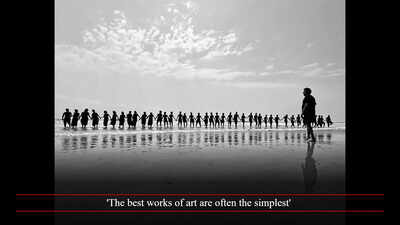
As the waves moved, the reflection transformed. With just a mirror, he created the illusion of a night sky. That’s the power of art. You don’t need elaborate setups. It’s not about budget. It’s about ideas.Kerkar: The best works of art are often the simplest. Fifty people walking in a straight line on an empty beach can be incredibly dramatic. Nature already provides the most extraordinary set. The task is to use it meaningfully.Ishaan: If you look at filmmakers like Satyajit Ray, they created extraordinary work with very limited resources. At some level, it comes down to choice. Independent filmmaking often means choosing the harder route.It requires sacrifice, but more than that, clarity – why are you doing this? What is the purpose of your work? That search sustains you.
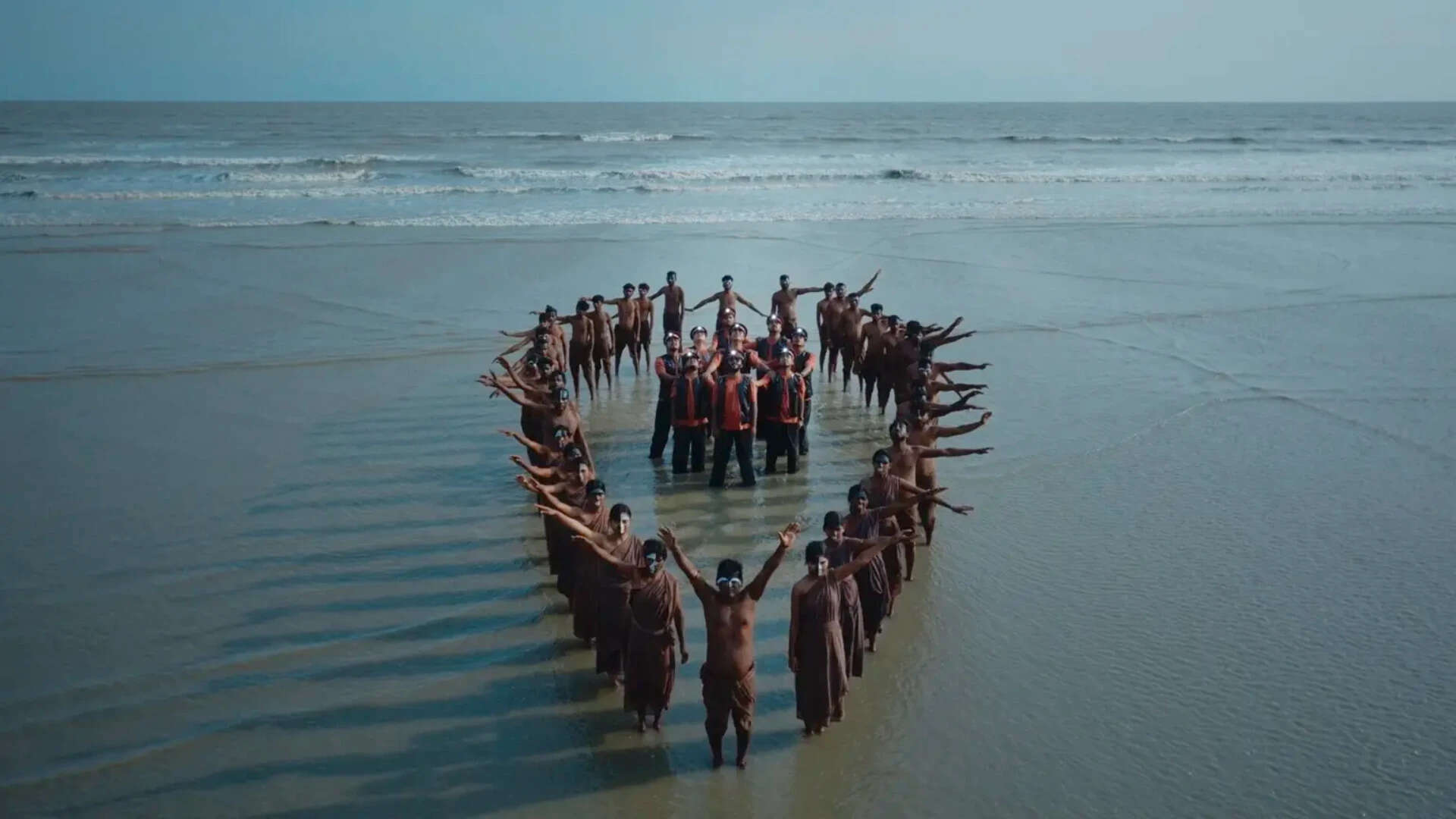
The band rehearses with the dancers for the song
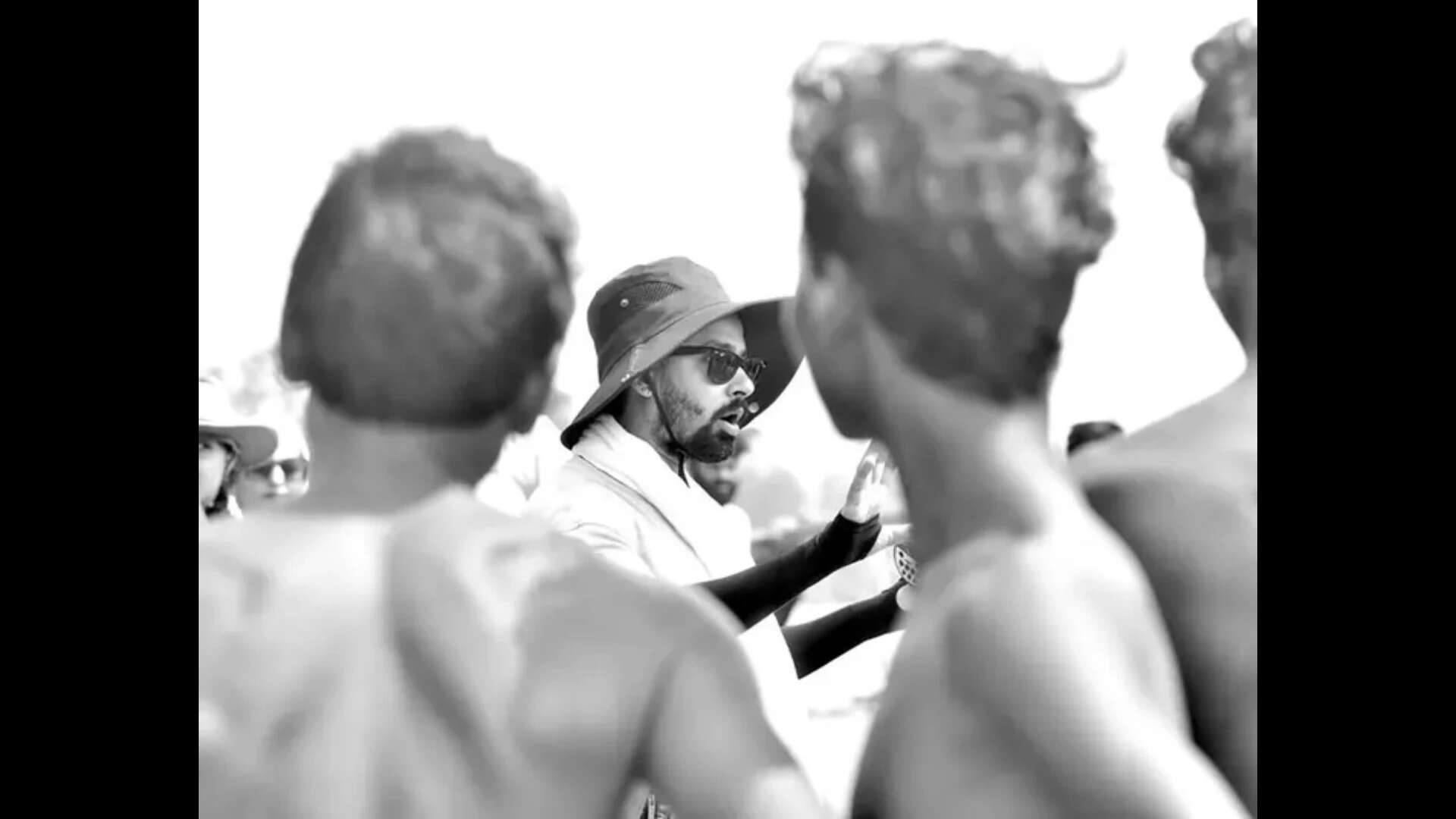
Riddhi Sen
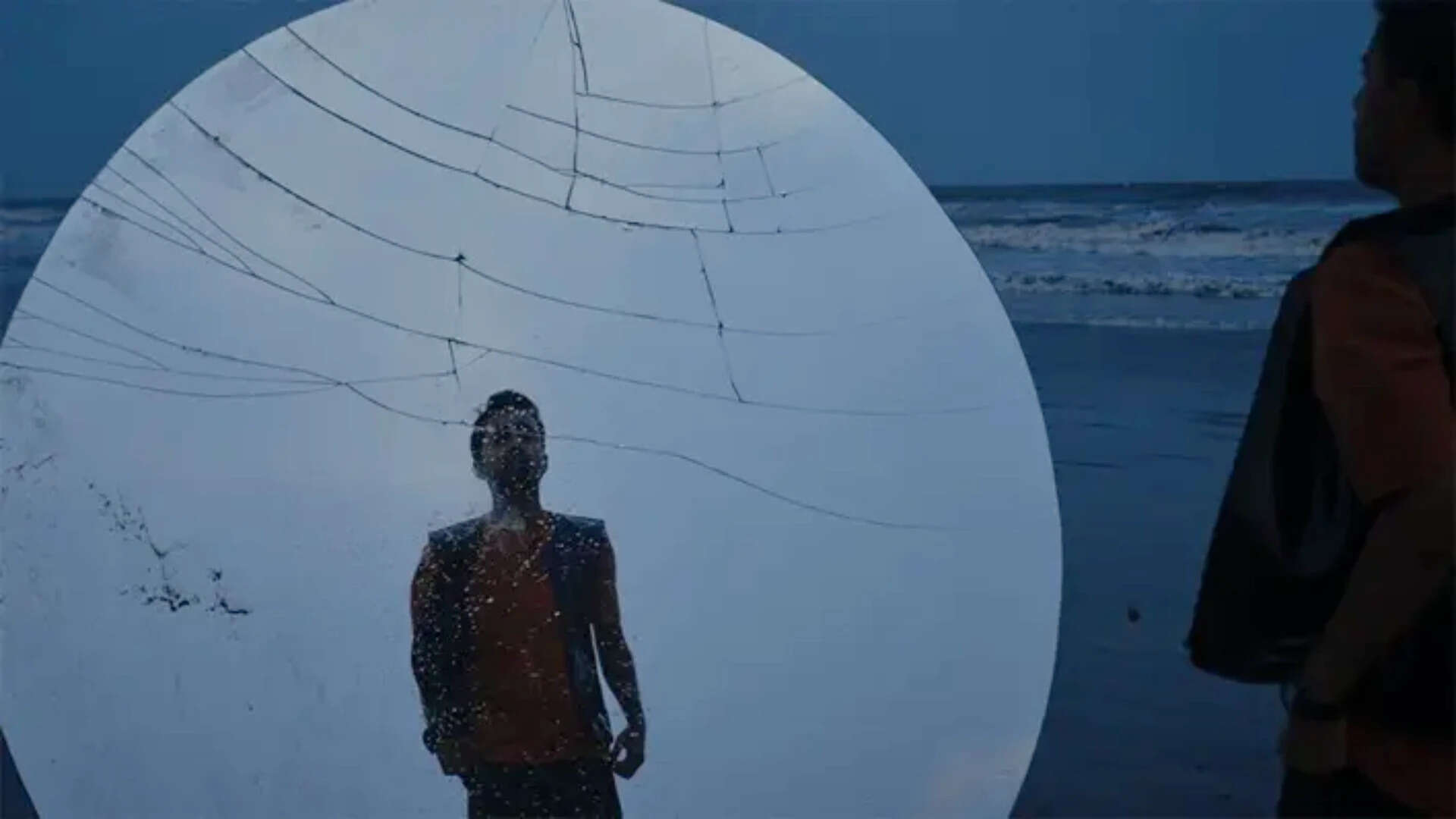
The mirror shot, inspired by Kerkar’s use of a reflective surface, created a perfect nighttime effect in broad daylight
This project required both scale and intimacy… Even though there are large, expansive visuals – wide shots, drone shots – it is ultimately about people. And Ishaan’s instinct instinct – where to place the camera, how to move with people, how to respond to a moment – was crucial.
Riddhi Sen
There’s a certain energy that comes from collaborations like this. Everyone is stepping slightly outside their comfort zone, and that friction creates something new. You can feel that in the final film.
Anirban Bhattacharya