

For nearly three decades, Rupam Islam has commanded both the stage and the conversation – whether as the driving force behind Fossils or in his ‘ekok’ avatar. From a time when Bangla rock was dismissed as an improbability to being anointed a generational voice of rebellion, love, and politics, his worldview continues to shape and challenge the cultural landscape.
A changemaker in the truest sense, Rupam reflects on a journey where he was often told “Bangla-e Rock hoy na,” yet chose to remain committed to the sound, even when “there were less than 10 people in the audience.” CT tuned in to the voice of a movement that refuses to be silenced.Fossils has shaped the sound of Bangla rock for over two decades. When you look back at that journey, which moments feel the most defining for you personally and creatively? It has been a long journey marked by constant ups and downs. One of the earliest defining moments came when Fossils found its first set of permanent members. Although we had been performing since 1998, a stable line-up only came together in late 1999 or early 2000. Another key milestone was securing an album deal with Asha Audio, after getting tossed around and being told that Bangla rock would not work, and that we should attempt something like Tor Bhorshate (Rupam’s first solo album, released by HMV in 1998).The self-titled Fossils album went on to become the first Bengali album to have ‘ROCK’ clearly printed as its genre on the cover. At the time, this was a huge risk. Another turning point came with the arrival of FM radio, when two songs from the album began to be played regularly. Almost overnight, we became a household name.The journey, however, was far from easy. We were often told “Bangla-e Rock hoy na,” and when another band stormed the Kolkata scene with folk renditions, many so-called rock bands shifted their sound and band members to follow that trend.
We chose instead to remain committed to rock, even if it meant being seen as unsuccessful.And now, Fossils 7 topped the all-India iTunes chart for over 72 hours, with Spotify featuring it on its official all-India rock playlist cover – a significant moment for Bengal’s alternative music scene.
We have been booed at, heckled by fans of other bands. Once, the host band at an event made us wait for six hours while they lip-synced through their set. But even when there were less than 10 people in the audience, we stayed and played. Every experience hardened our resolve and deepened our conviction.
Rupam Islam
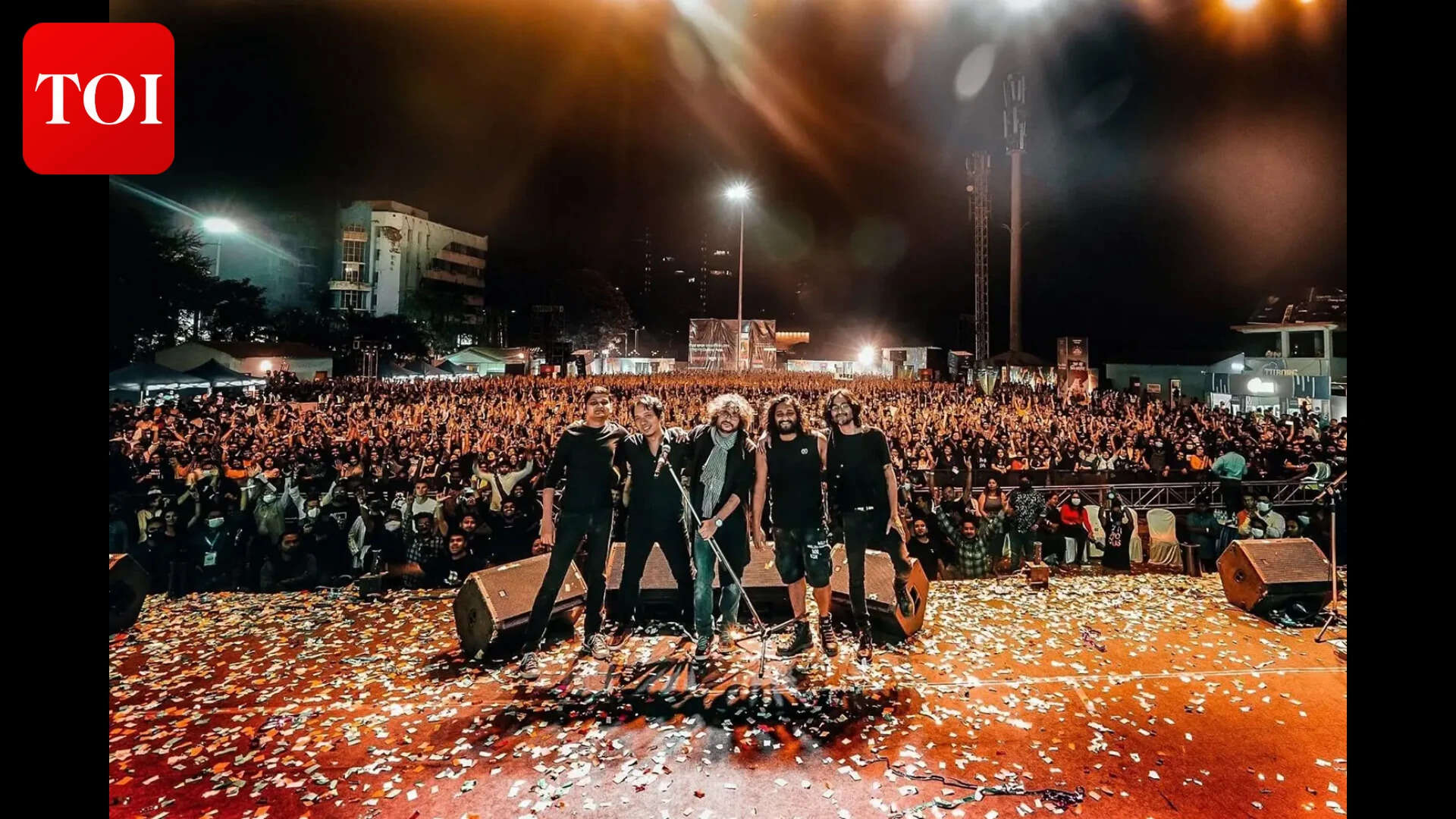
Fossils on-stage after a packed concert
Your solo work often feels intimate and introspective. How different is Rupam the solo musician from Rupam the band frontman?Solo Rupam and Rupam of Fossils are very different as stage performers, yet at the core, they are the same person.
I often say both are like a storm – one is physical while the other is spiritual.With Fossils, I have performed superhits and iconic numbers on stage for years. Some songs remain constant in the setlist because of audience and organisers’ expectations, so I focus on making each performance feel new through physical energy, stage movement, and presentation.In my solo or ‘ekok’ shows, everything is far more spontaneous.
I am alone on stage, often with more than one instrument, with the freedom to improvise, change the setlist, extend songs, or alter arrangements on the spot. The songs here are usually not my biggest hits, and there is much more direct conversation with the audience, often philosophical and spiritual.
Whether it is Fossils or my Ekok, both experiences are meant to leave the audience with introspection.
Rupam Islam
Bangla rock once felt like a rebellion. Do you think that spirit of rebellion in music still exists today, or has it taken a different form?Bangla Rock is always a rebellion. Listen to our latest release and you will realise we are just as rebellious as we used to be.
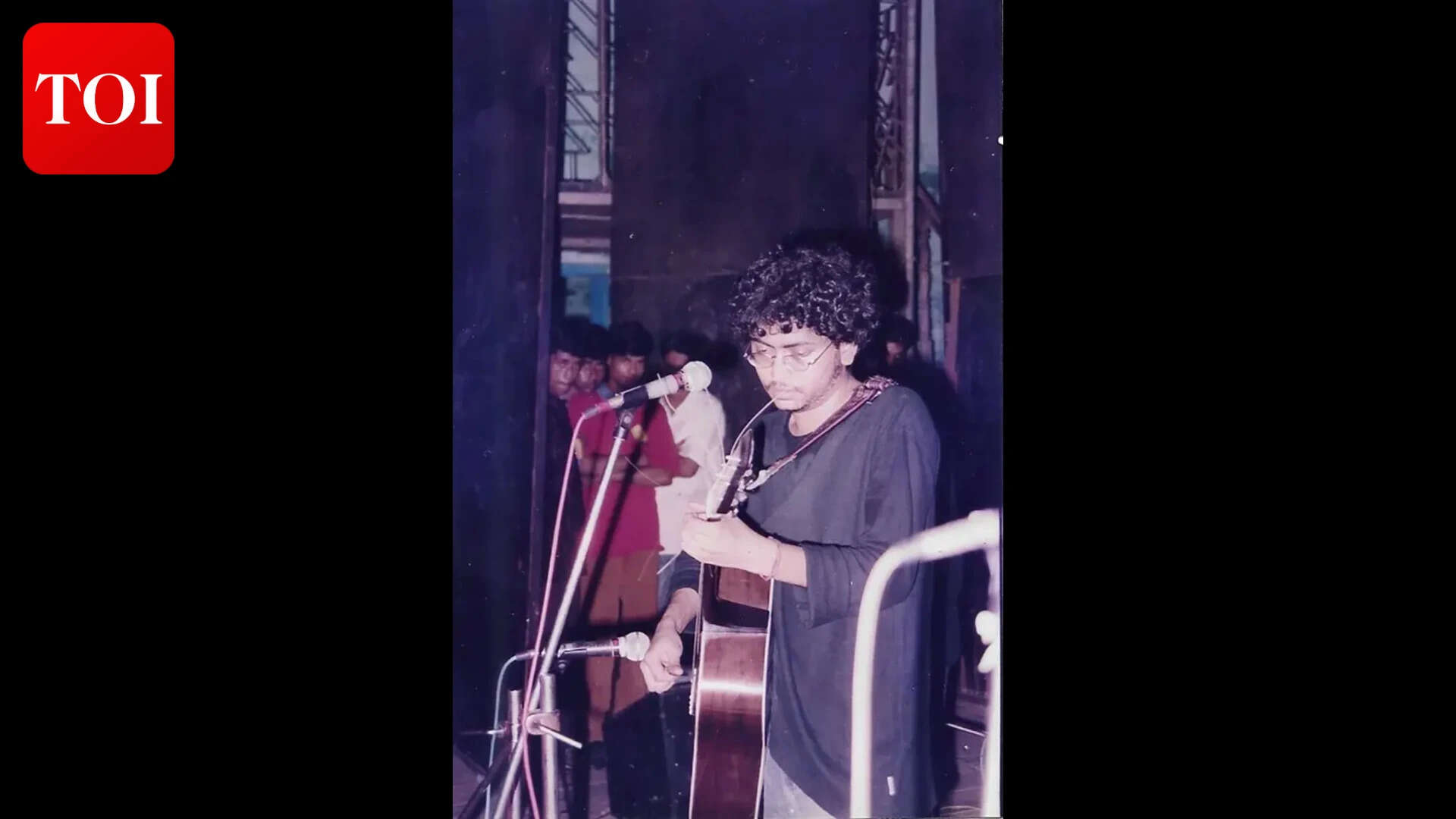
Throwback: Rupam performing on stage (2000)
With digital platforms reshaping the industry, how do you see the current musical landscape for independent Bengali musicians?I think it is much better now than it was even two years ago. Until recently, a lot of importance was given to music videos, but streaming platforms have now become just as significant as YouTube. People are returning to listening to music rather than only watching it.This is a positive shift, as it brings the spotlight back to independent musicians instead of those primarily backed by feature films.
In fact, we have decided to create only short clips for our new songs, not full-length music videos, because we believe music is an audio story, not something dependent on visual representation.After decades of music with Fossils and as a solo artiste, what still excites you creatively—what keeps you searching for the next sound or story?My listeners still excite me the most. When I look at our Spotify statistics and see that even today, 47% of our listeners are in the 18–24 age group and another 29% are between 25–34, it tells me that Fossils continues to stay relevant to the younger generation.
It shows that our music is not just nostalgia for those who grew up with us in the early 2000s, but something that still connects with new listeners.

Logo of Fossils’ latest album F7
And when I see our shows are consistently housefull, no matter when or where we perform, it is deeply inspiring. That connection with people, across generations, is what keeps me searching for the next sound, the next story, and the next song.
Kolkata is not just where I was born, it is the city I have lived in all my life. My songs come from my own lived experiences, so it feels only natural that Kolkata finds its way into them again and again
Rupam Islam