World
Pakistan Army Allegedly Recruiting Ex-Afghan Soldiers, Warlords To Fight Taliban | Exclusive
By: News18 World
Published: 24 October 2026
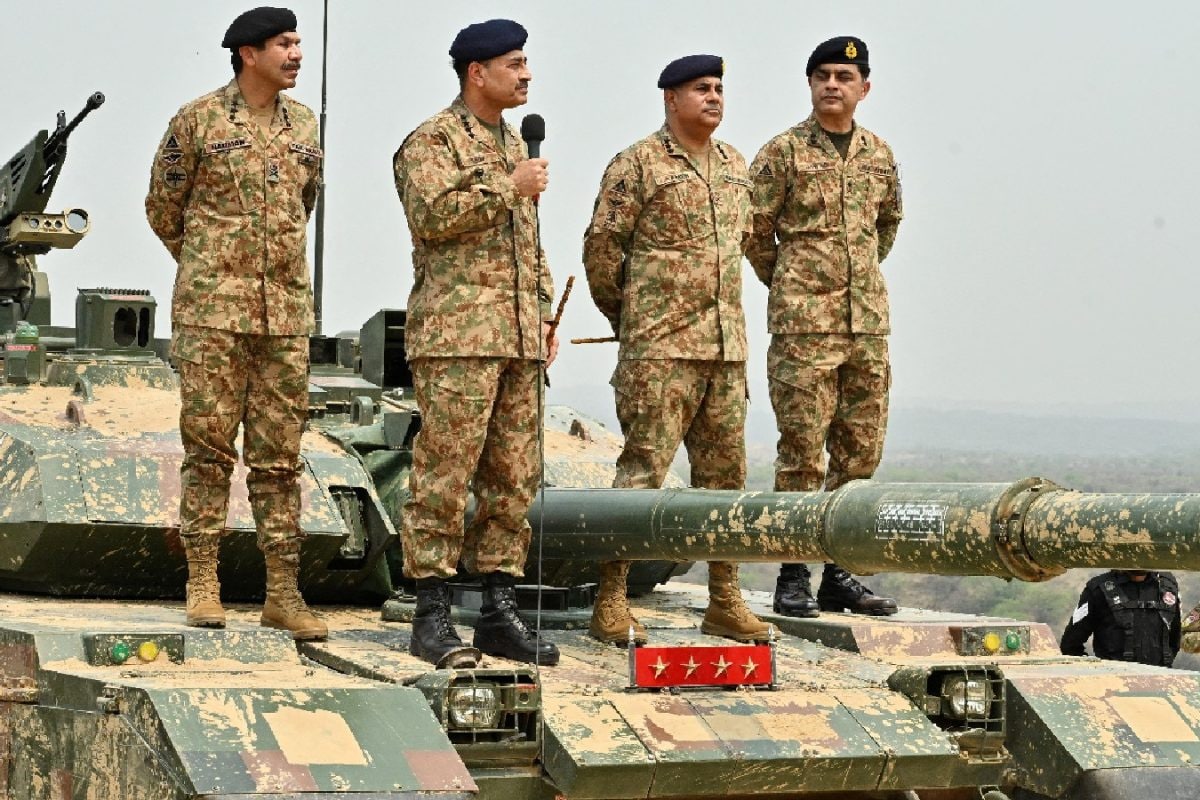
Photo / Illustration: Haldwani Times News Desk
<p>Pakistan’s military, under Army Chief Asim Munir, is allegedly recruiting former Afghan National Army personnel and local warlords to build an armed force against the Afghan Taliban, raising concerns over Islamabad’s reported attempts to fuel a fresh civil war in Afghanistan.</p>
<p>The allegations have emerged amid worsening relations between Pakistan and Afghanistan, with both sides accusing each other of supporting militant groups and destabilising the region.</p>
<p>Pakistan Military Allegedly Setting Up Fighter Training Camps In Balochistan</p>
<p>Balochistan-based journalist Fateh Baloch has claimed that the Pakistan Army is recruiting and training Afghan fighters at several locations in Balochistan for operations against the Taliban government in Afghanistan.</p>
<p>According to Baloch, the Pakistan military established its first training camp for Afghan fighters in the Dalbandin area of Balochistan. Similar camps are reportedly operating in Kuchlak and Hazarganji in Quetta.</p>
<p>The journalist alleged that the recruitment drive involves former Afghan National Army personnel, security officials and local warlords who could be deployed in operations against the Afghan Taliban.</p>
<p>He further claimed that Afghan fighters recruited under the programme are being paid between Rs 15,000 and Rs 20,000.</p>
<p>Taliban Accuses Pakistan Of Destabilising Afghanistan</p>
<p>The allegations come against the backdrop of growing hostility between Pakistan and Afghanistan, with the Taliban administration repeatedly accusing Islamabad of interfering in the country’s internal affairs.</p>
<p>Afghan Taliban spokesman Zabiullah Mujahid has alleged that Pakistan is attempting to undermine peace in Afghanistan by supporting opposition groups and facilitating the infiltration of militants.</p>
<p>Concerns over Pakistan’s alleged support for anti-Taliban groups have also featured in recent Moscow Format discussions, reflecting Kabul’s apprehensions over external interference.</p>
<p>Meanwhile, former US Special Representative for Afghanistan Reconciliation Zalmay Khalilzad has warned that relations between Pakistan and Afghanistan could deteriorate further.</p>
<p>Pakistan-Afghanistan Trade Plunges 95% Amid Border Tensions</p>
<p>The deteriorating relations between Pakistan and Afghanistan have also severely disrupted bilateral trade, which has reportedly fallen by about 95 per cent amid the continued closure of key border crossings.</p>
<p>According to VOA News, Mohammad Younus Mohmand, Vice President of the Afghan Chapter of the Pakistan-Afghanistan Joint Chamber of Commerce and Industry, said trade and transit activities between the two countries had effectively come to a halt.</p>
<p>Data released by the Trade Development Authority of Pakistan showed that bilateral trade declined by 95 per cent in 2026-27 compared with the previous year, according to Pakistani newspaper Dawn. Trade had already fallen to $358 million in 2025-26 from $1.3 billion in 2024-25.</p>
<p>Pakistan closed its main border crossings with Afghanistan on October 12, 2025, following deadly clashes between Pakistani forces and the Afghan Taliban.</p>
<p>Islamabad has accused the Taliban administration of harbouring Tehrik-e-Taliban Pakistan (TTP), which has claimed responsibility for attacks inside Pakistan, and has linked the reopening of border crossings to action against militant groups operating from Afghan territory.</p>
<p>The Taliban have denied providing sanctuary to militant groups, although a UN report released in August said the Afghan Taliban continued to support the TTP.</p>
<p>According to local reports, the Pakistan military has established training camps for recruited Afghan fighters in Dalbandin, Kuchlak, and Hazarganji in Quetta, Balochistan.</p>
<p>Bilateral trade between Pakistan and Afghanistan has plummeted by approximately 95 percent due to ongoing border tensions and the closure of key border crossings.</p>