World
Spain's High-Speed Train Crash: Top 10 Deadliest Railway Mishaps In European History
By: News18 World
Published: 28 October 2026
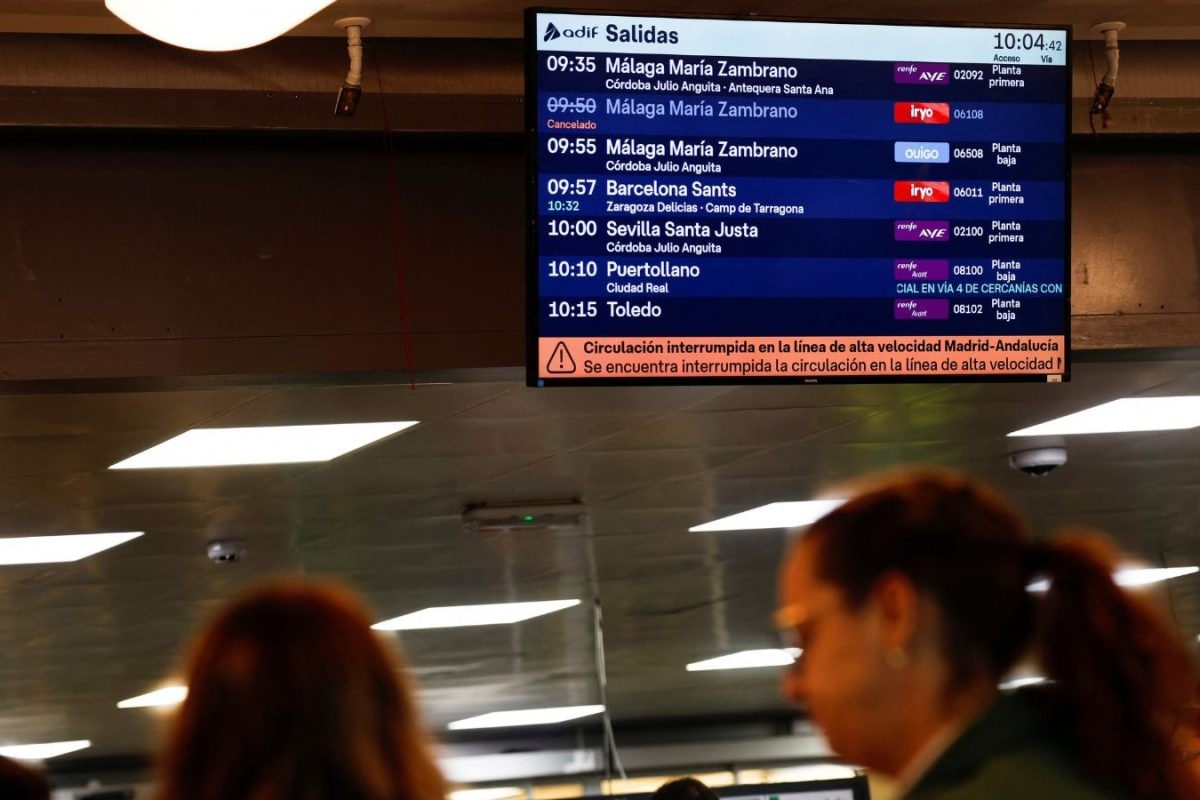
Photo / Illustration: Haldwani Times News Desk
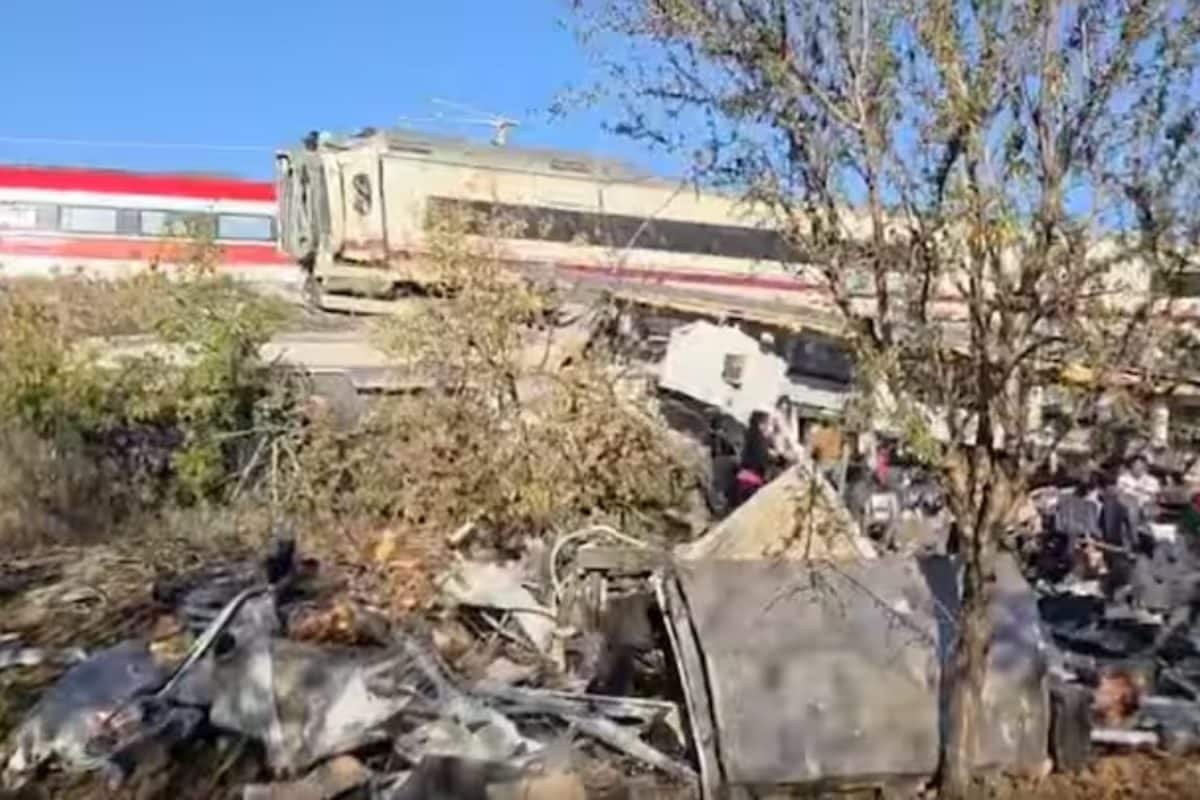
<p>Two high-speed trains collided in Spain on Wednesday morning in what the country’s prime minister has described as a “serious" incident.</p>
<p>The recent high-speed train collision between Los Yébenes and Urda in Spain’s Toledo province — coming just months after the tragic Adamuz rail disaster — has once again brought rail infrastructure safety to the forefront.</p>
<p>Historically, Europe’s deadliest train disasters occurred during the chaotic operational conditions of the World Wars. However, severe design flaws and human error have also led to massive peacetime accidents.</p>
<p>A train operated by the state-owned company Renfe and another operated by the company Iryo collided in the central Spanish province of Toledo, between the towns of Mora, Orgaz, and Urda, according to the railway infrastructure manager ADIF. Both trains were traveling along the route connecting the capital city Madrid with Seville in Spain’s southern Andalusia province. The crash has forced the suspension of the high-speed line linking the Madrid region with Andalusia.</p>
<p>Spain’s Prime Minister Pedro Sánchez said he was “shocked by the serious train incident" in Toledo. In a post on X, Sánchez added that emergency services are on the ground to assist those impacted in the crash. “My affection, solidarity, and support to all the victims and their families," he said.</p>
<p>Two high-speed trains operated by Renfe and Iryo collided in the Spanish province of Toledo on Wednesday morning.</p>
<p>The recent crash has forced the suspension of the high-speed rail line connecting the Madrid region with Andalusia.</p>
<p>The Saint-Michel-de-Maurienne derailment in France in 1917 resulted in an estimated 800 to 1,000 deaths.</p>
<p>The Eschede train disaster in Germany on June 3, 1998, resulted in 101 deaths.</p>
<p>1. The Saint-Michel-de-Maurienne Derailment (France, 1917) — 800 to 1,000 Deaths</p>
<p>Widely recognized as Europe’s worst rail tragedy, this occurred on 12 December 1917. A severely overloaded troop train carrying roughly 1,000 French soldiers home from the Italian front suffered a total brake failure on a steep Alpine descent. The wooden cars derailed at high speed, telescoped into one another, and caught fire.</p>
<p>2. The Ciurea Rail Disaster (Romania, 1917) — 700 to 1,000 Deaths</p>
<p>In January 1917, a train packed with wounded soldiers and civilians fleeing the German army lost control on a steep incline approaching Ciurea station. The brakes failed, causing the 26-car train to derail at extreme speed and plow into a stationary engine, bursting into a massive inferno.</p>
<p>3. The Balvano Train Disaster (Italy, 1944) — 520 to 600 Deaths</p>
<p>On 3 March 1944, a heavily loaded freight train carrying hundreds of illegal stowaways stalled inside the poorly ventilated Galleria delle Armi tunnel near Balvano. The train’s lower-grade wartime coal produced immense amounts of toxic carbon monoxide gas. It silently suffocated more than 500 passengers in their sleep without the train ever crashing.</p>
<p>4. The Torre del Bierzo Disaster (Spain, 1944) — 500 Deaths</p>
<p>In January 1944, a catastrophic three-train collision inside a tunnel near Leon, Spain, caused a massive, multi-day fire. A packed passenger mail express train suffered brake failure and slammed into a shunting engine inside the tunnel, which was then struck by a fully loaded coal train coming from the opposite direction.</p>
<p>5. The Ufa Train Disaster (Russia/Soviet Union, 1989) — 575 Deaths</p>
<p>This catastrophic peacetime disaster occurred on 4 June 1989 near Asha. A faulty pipeline leaked massive amounts of liquefied petroleum gas (LPG) into a valley, creating a highly volatile vapor cloud. As two heavily packed passenger trains passed each other, sparks from the wheel tracks ignited the gas, triggering an explosion equivalent to 10 kilotons of TNT.</p>
<p>6. The Quintinshill Rail Disaster (Scotland, UK, 1915) — 226 Deaths</p>
<p>The deadliest rail crash in British history occurred on 22 May 1915. A troop train carrying soldiers to the Gallipoli campaign collided head-on with a stationary local train due to a signalman communication error. Moments later, a London-bound express crashed into the wreckage, igniting the gas-lit wooden carriages.</p>
<p>7. The Kaprun Funicular Fire (Austria, 2000) — 155 Deaths</p>
<p>On 11 November 2000, an ascending funicular train caught fire inside a steep mountain tunnel heading to the Kitzsteinhorn glacier. The toxic smoke and chimney effect of the tunnel trapped and suffocated 155 skiers and snowboarders inside.</p>
<p>8. The Guadalajara Train Crash (Spain, 1915) — 150 to 300 Deaths</p>
<p>In October 1915, an overloaded passenger train traveling from Madrid lost braking control on a steep downgrade near Guadalajara. The train derailed on a curve and plunged down a ravine, resulting in an estimated 150 to 300 fatalities.</p>
<p>9. The Harrow and Wealdstone Crash (England, UK, 1952) — 112 Deaths</p>
<p>On 8 October 1952, three trains collided at a London station during the morning rush hour. An express train overran a caution signal and crashed into a stationary local train. Seconds later, a second express train traveling in the opposite direction plowed directly into the mounting wreckage.</p>
<p>10. The Eschede Train Disaster (Germany, 1998) — 101 Deaths</p>
<p>The deadliest high-speed rail disaster in modern history occurred on 3 June 1998. A single metal fatigue crack on a wheel tyre caused an Intercity-Express (ICE) train traveling at 200 km/h to derail. The train jackknifed, collapsing a concrete road bridge onto the rear passenger carriages.</p>
<p>The high-speed rail line connecting the capital city Madrid with Andalusia and Seville, as well as routes involving Ciudad Real, has been completely suspended following the collision.</p>
<p>As many as 46 people were killed and nearly 200 injured after the two high-speed trains collided near Toledo on Wednesday morning.</p>