
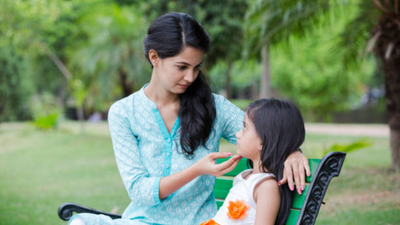
There was a time when childhood had corners.Small private spaces where no one was observing. No one was measuring. No one was recording.Now think about a regular day at home.A parent checks the child’s location on an app while they are at tuition.
A study table faces the living room so work is always visible. WhatsApp school groups keep parents updated on homework in real time.
CCTV cameras sit in hallways “just for safety.” Browsing history is quietly reviewed. Screen time dashboards track every minute.None of this feels extreme on its own.In fact, most of it comes from care.But taken together, something subtle is changing.Children are growing up watched.Not in the dramatic, authoritarian sense. Not because parents distrust them deeply. But because technology has made constant visibility easy and socially acceptable.Across urban Indian homes, surveillance is no longer something reserved for discipline. It has become routine parenting.You might recognise the justifications.It is for safety.It is for academic focus.It is to protect them from the internet.
It is to ensure they are not mixing with the wrong crowd.These worries are all real!Recent talks around digital risks, cyberbullying, and child safety have made parents more alert than ever. Studies from UNICEF on digital childhoods have highlighted how parents worldwide feel unequipped to manage online exposure, often turning to monitoring as a solution.In India, where both physical and digital safety anxieties are rising, this instinct becomes stronger.So the home evolves quietly.Location sharing becomes normal before adolescence. Shared passwords are expected. Study apps report performance directly to parents. Even playtime can feel supervised through structured activity schedules.Children rarely protest openly.Because they too grow up thinking this is normal.But constant observation changes behaviour.Psychologists studying child autonomy often note that when individuals feel permanently watched, they do not necessarily become more disciplined.
They become more careful about appearances.In simple terms, they learn to perform.Not misbehaving is no longer about values. It becomes about visibility.Many teenagers today speak of feeling “accounted for” even when they are not being directly questioned. The awareness that someone could check creates a subtle internal pressure to stay within acceptable limits.Over time, this shapes identity.Mistakes feel riskier. Experimentation feels unsafe. Privacy becomes something negotiated rather than assumed.And while surveillance may reduce certain dangers, it can also delay independence.If every choice is tracked, when does trust get practiced?If every move is visible, when does responsibility grow?The irony is that parents are often responding to a world that feels more uncertain. News cycles amplify dangers. Social media poses such risks that previous generations never knew existed.So monitoring becomes reassurance.But reassurance can quietly replace conversation.Instead of asking “How was your day?” we already know through notifications.Instead of discussing mistakes, we prevent them through oversight.And in doing so, the home can shift from being a place of safety to a place of silent performance.Children begin to live inside expectations rather than relationships.This does not mean all monitoring is wrong.Young children need supervision. Teenagers navigating digital spaces do need guidance.The shift happens when oversight replaces dialogue.When watching replaces listening.And when safety becomes indistinguishable from control.The question is not whether children should be guided.It is whether they are also allowed spaces where they are not being measured.Because growing up is not only about protection.It is also about learning who you are when no one is watching.