
Japan, shifting from its pacifist constitution, is now poised to export lethal weapons. This significant policy change, driven by regional security concerns, allows Tokyo to leverage its advanced defense technology. The move opens new avenues for its burgeoning defense industry, potentially transforming Japan into a major global arms supplier.
The Japanese government under Prime Minister Sanae Takaichi has cleared the way for the Pacifist nation to sell lethal weapons to other nations. This is a move away from the principles of Japan’s 1947 constitution.
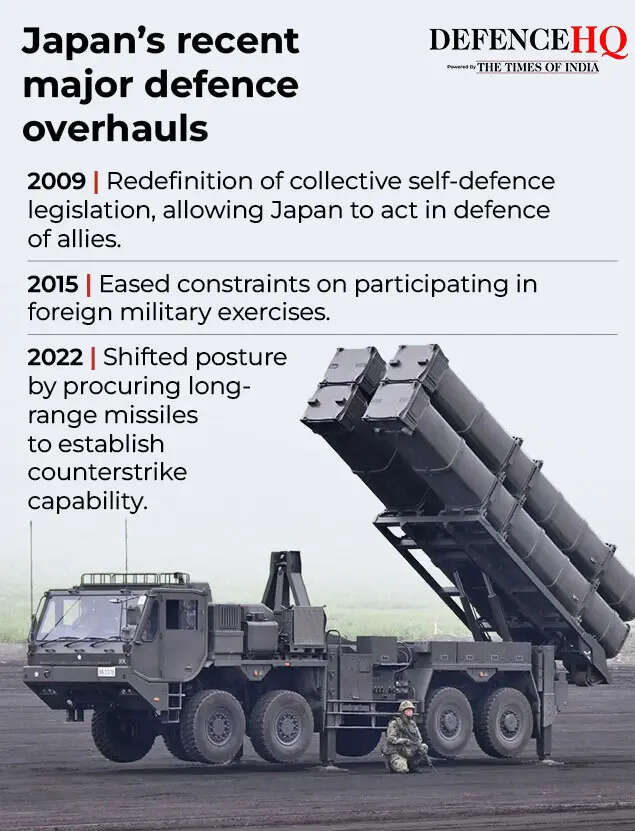
That central document renounced Japan’s sovereign right to belligerency. Recent geopolitical events, however, have caused Japan to change its outlook on how it views its military interacting with the wider world.The main manifestation of these changes diluting the constitution is the 2009 redefinition of the collective self-defence legislation, which allows Japan to act in defence of allies. In 2015, Japan eased constraints on taking part in foreign exercises.
In 2022, Tokyo changed its posture, procuring long-range missiles to gain a counterstrike capability.
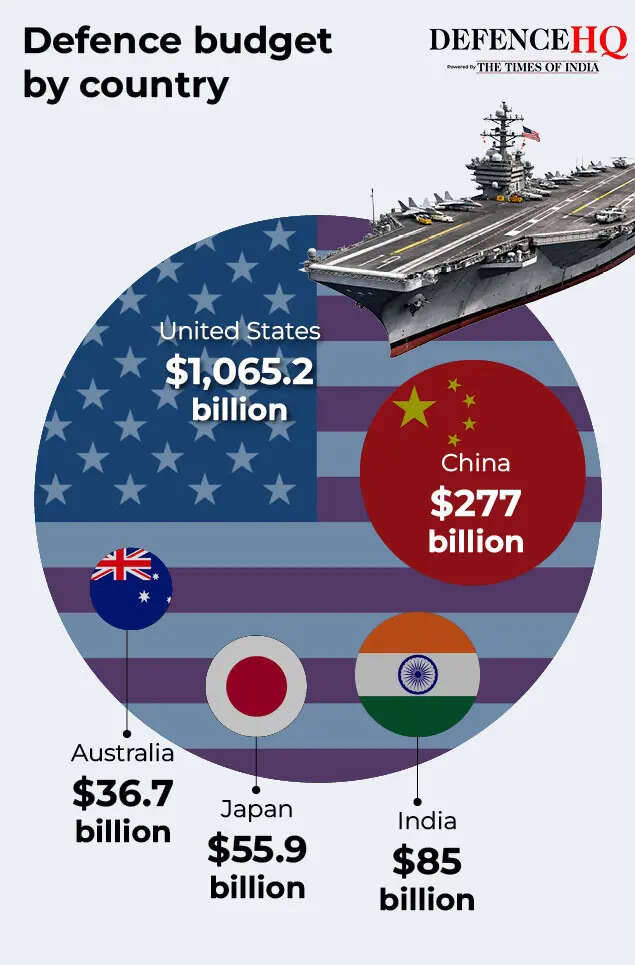
In 2024, Tokyo removed the 1% defence spending cap and aims to increase defence spending to 2% of GDP by 2027. As per the budget allocation for the financial year 2026, the Japanese defence budget stands at $ 52 billion. Japan has seen one of the largest increases in defence spending; its defence spending increased 76% from 2016-20 to 2021-25.
Tokyo was also one of the largest importers of weapons in the 2021-25 period, as per Stockholm International Peace Research Institute (SIPRI).
An assertive China and a belligerent North Korea are said to be the reasons for these changes.
Japan is in the news today because of the decision to ease its long held restrictions on the sale of lethal arms. The rationale is the deteriorating security environment in the East and South China seas and its threat perceptions from China and North Korea. Ambassador Deepa Gopalan Wadhwa, former envoy to Japan
Why did Japan become a pacifist nation
After its defeat during the second world war, Japan adopted a new constitution. This new constitution was written by the Americans, with the aim of making Japan a pacifist state. The Australia-based think tank Lowy Institute, which produces the Asia Power Index, states that the country denounced militarism as per Article 9 of that document.Japan had been embroiled in a series of conflicts throughout the first half of the last century. This series of conflicts started with the Russo-Japanese war in 1905, which saw the first defeat of a European nation at the hands of an oriental power.After this conflict, the Japanese got involved in a conflict in Manchuria in 1931. The Japanese forces constantly skirmished with Chinese forces between 1931 and 1937, leading to a full-fledged war that lasted till the end of the second world war in 1945.
The war ended with the Americans bombing Hiroshima and Nagasaki, leading to an unconditional surrender. By the end of the war, American firebombing had also devastated Tokyo.In 1951, Japan and the United States signed the Treaty of Mutual Cooperation and Security, placing the responsibility for an unarmed Japan’s security onto the United States. In 1954, a year after the Korean War ended (1951-53), rising fears of communist expansion in the Far East sounded alarm bells in both Tokyo and Washington, DC.
On July 1st of 1954, the Japanese Self Defence Forces were established with the explicit aim of only defending Japan. With strict limitations on what its military can do and the type of weapons the country can make or procure.
Japan rearms
The removal of the self-imposed ban on selling lethal weapons to other countries opens many avenues for Japan, as the country is known for its high-quality weapon systems. The Japanese are known for their advanced shipbuilding capabilities and have some of the most advanced naval platforms. The Soryu class and its successor, the Taigei class submarines, are considered some of the best in the world. When it comes to surface vessels, the Maya class vessels come equipped with some of the latest technologies available.
The Japanese also operate the Izumo-class helicopter destroyers, which are small aircraft carriers that operate choppers.The Japanese are also known for producing effective surface-to-air missiles, ground combat vehicles, artillery systems and surface-to-surface missiles. The country also makes transport and maritime patrol aircraft.
India, Japan and the Quad
India and Japan are members of the QUAD grouping along with Australia and the United States.
Both India and Japan have a long history of military cooperation. All three services hold separate exercises with their Japanese counterparts. New Delhi and Tokyo have agreed to explore opportunities to co-develop and co-produce equipment and technology that is geared towards current and future security needs. All members of the QUAD are working towards supporting a free, open, and secure Indo-Pacific region.
The grouping facilitates cooperation between the partners on security and technology sharing, among other aspects.QUAD partners, Japan and Australia, inked a deal for 11 top-of-the-line Mogami-class frigates for a grand $7.4 billion. This is the first major export deal for Japan. The Japanese frigate competed with Germany’s MEKO A-200-class, South Korea’s FF(X)-class and Spain’s Alfa 3000-class frigates. In the past, the Mogami lost out to the British Arrowhead and the Franco-Italian FREMM class frigate for an Indonesian contract
Growing strategic ties between India and Japan
In 2024, India, seeking naval technologies from Japan, signed an agreement for the UNICORN (Unified Complex Radio Antenna). This equipment helps stealth ships by integrating radar and communication antennas in a single mast, thereby reducing the radar signature. India is considering partnering with a foreign consortium to develop a sixth-generation fighter aircraft. Tokyo and New Delhi are in talks to discuss India’s participation in the Global Combat Air Programme(GCAP) sixth-generation project, according to the Japan Times.India is also in talks with Japan for the co-developmentof a jet engine. The Indian Navy has expressed interest in amphibious aircraft, for which the Japanese US-2 could be a contender.Now that Japan is removing self-imposed barriers on weapon system sales, it has the potential to become a major defence player. The Japanese defence industry was hamstrung by the lack of a market, but it can now become aggressive in selling its wares.
Insofar as India is concerned defence and security ties are an important pillar of our Special Global and Strategic partnership. We signed agreements on the transfer of defence equipment and technology with Japan in 2015 and have since explored co-development, co-production and procurement of defence equipment. There recent changes in Japanese policy will give a filip to defence cooperation given our close ties and converging interests.Ambassador Deepa Gopalan Wadhwa, former envoy to Japan
Ambassador Deepa Gopalan Wadhwa, former envoy to Japan
India’s growing defence sector and how it can help Japan
India has been expanding its defence industrial base under both the Make in India and Aatmanirbhar Bharat missions.
India has been making critical components for critical western weapon systems. India is currently making aerostructures for aircraft such as the Chinook, Apache, F/A-18, F-16 and the C-130, to name a few. Private firms in India are already making weapon systems that are being used in ongoing conflicts. This means that there is a potential for Japanese defence firms to manufacture platforms in India to sell abroad as demand grows. Both countries have already laid the framework to co-produce systems under the Joint Declaration on Security Cooperation between India and Japan, signed in August 2025. The document also states that both nations must strive to contribute to each other’s defence capabilities and readiness.