
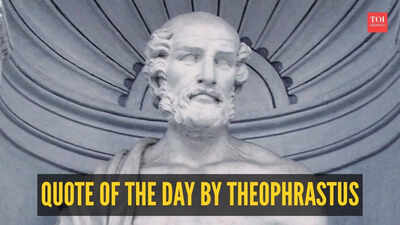
Theophrastus was a renowned Greek philosopher and a successor to Aristotle in the Peripatetic school of philosophy. Often referred to as the “Father of Botany,” because of his numerous contributions in the field of natural science, as well as in ethics and metaphysics.
His work involved both thinking and reflection on human nature and the deeper meaning of life.This thought-provoking quote, “Remember that life holds out many pleasing deceits to us by the vanity of glory; for that when we are beginning to live, then we are dying. There is, therefore, nothing more profitless than ambition” is widely attributed to Theophrastus and reflects his philosophical outlook on life.
What the quote conveys
Essentially, the quote emphasises how glory and ambition have an element of deception.
According to Theophrastus, the search for fame, reputation and prestige is something that looks appealing but tends to mislead us. This is because they give rise to the illusion that greatness and appreciation can lead to satisfaction. Yet, in our attempts to reach these goals, we risk losing ourselves.The line “when we are beginning to live, then we are dying” conveys a strong message about the transient state of our lives.
This statement emphasises the irony behind the fact that even as we learn to comprehend life or accomplish something worthwhile, time flies away from us. This insight makes one understand the need for living life with a sense of urgency and awareness.Through describing ambition as profitless, Theophrastus is not entirely dismissing hard work or goals but rather warning against blind ambition, one that is driven by ego or societal validation rather than genuine purpose.
He encourages a life of awareness, where actions are guided by meaning rather than mere desire for recognition. Ambition must be guided by direction.
Works of Theophrastus
Theophrastus is known to have written extensively, but unfortunately, most of his writings have been lost over time. Nevertheless, there are some key pieces of literature which survive to this day and these include the famous works on botany known as Enquiry into Plants and On the Causes of Plants. Apart from his work in the area of science, Theophrastus was also interested in human nature and character as exemplified by his treatise called Characters. In this work, he describes different types of personalities, doing so with great wisdom and even humour as reflected in the above-mentioned quotation. The lessons taught by Theophrastus present us with a gentle caution in reconsidering our priorities in life. Amidst all the praise for our goals and achievements, his lessons remind us of the true meaning of life. Our lives are not long, and chasing our illusions detracts from truly enjoying life itself.Instead of getting obsessed with winning at any cost in the rat race for fame, Theophrastus teaches us how to live consciously, cherish time and aim to have more profound achievements in life. The teachings of Theophrastus still resonate with people through many centuries, motivating everyone to strive for both success and significance in life.