

Being physically fit does not always reflect reproductive health.
A man may run marathons, eat clean, and rarely fall sick. On the surface, everything signals “perfect health.” But reproductive health does not always follow the same script. The body can look strong while something quieter, more complex, unfolds at a microscopic level.Sperm health is one such silent story. It doesn’t announce problems early. And that is where the confusion begins.
The hidden science behind sperm health
Sperm production, or spermatogenesis, is not a simple process. It depends on a tight balance of hormones, temperature, and cellular function. Even small disruptions can change outcomes.Dr Meenu Handa explains, “Though having a physically fit body is the first stepping stone to wellness, it is a myth in the clinical world that being physically fit will ensure the good health of sperms.”This means a well-toned body does not guarantee healthy sperm count, shape, or movement. A man can have excellent stamina and still face issues like low motility or DNA damage in sperm cells.According to the NIH, male infertility contributes to nearly 30-40% of infertility cases globally. Yet many men remain unaware because standard health checks rarely include reproductive markers.
Sperm production depends on delicate internal processes that can be affected by heat, stress, lifestyle habits, and hidden deficiencies.
When fitness habits quietly backfire
Ironically, some habits associated with “healthy living” can work against sperm health.
Dr Handa notes, “Rigorous fitness activities such as exposing oneself to extreme heat in a sauna, the use of restrictive sports clothing, as well as protein supplement intake, may lead to the decline in sperm count and motility.”Heat is a major factor. The testes need a slightly cooler temperature than the rest of the body. Frequent sauna use, tight gym wear, or even prolonged cycling can disrupt this balance.Dr Jayesh Amin adds another layer: “The use of gadgets which generate heat requires special attention because the practice of keeping laptops on thighs… create excessive heat which results in increased scrotal temperature that negatively affects sperm production.”Even nutritional gaps can slip through. A person may look fit but still lack zinc, vitamin D, or antioxidants, nutrients essential for sperm function.
Stress, lifestyle, and the invisible load
Modern life adds pressure in ways that don’t always show up on the body.Deadlines, long work hours, and poor sleep patterns may not affect outward fitness immediately. But internally, they disturb hormone levels.Dr Handa points out, “The daily stress… meeting deadlines, society expectations and financial burden can all disrupt the hormones and affect sperm quality.”This aligns with findings from a study published in the NIH, which has highlighted rising infertility trends linked to lifestyle and environmental exposure.Smoking, alcohol, and even pollution add to the burden. These factors can lead to oxidative stress, damaging sperm DNA without obvious symptoms.
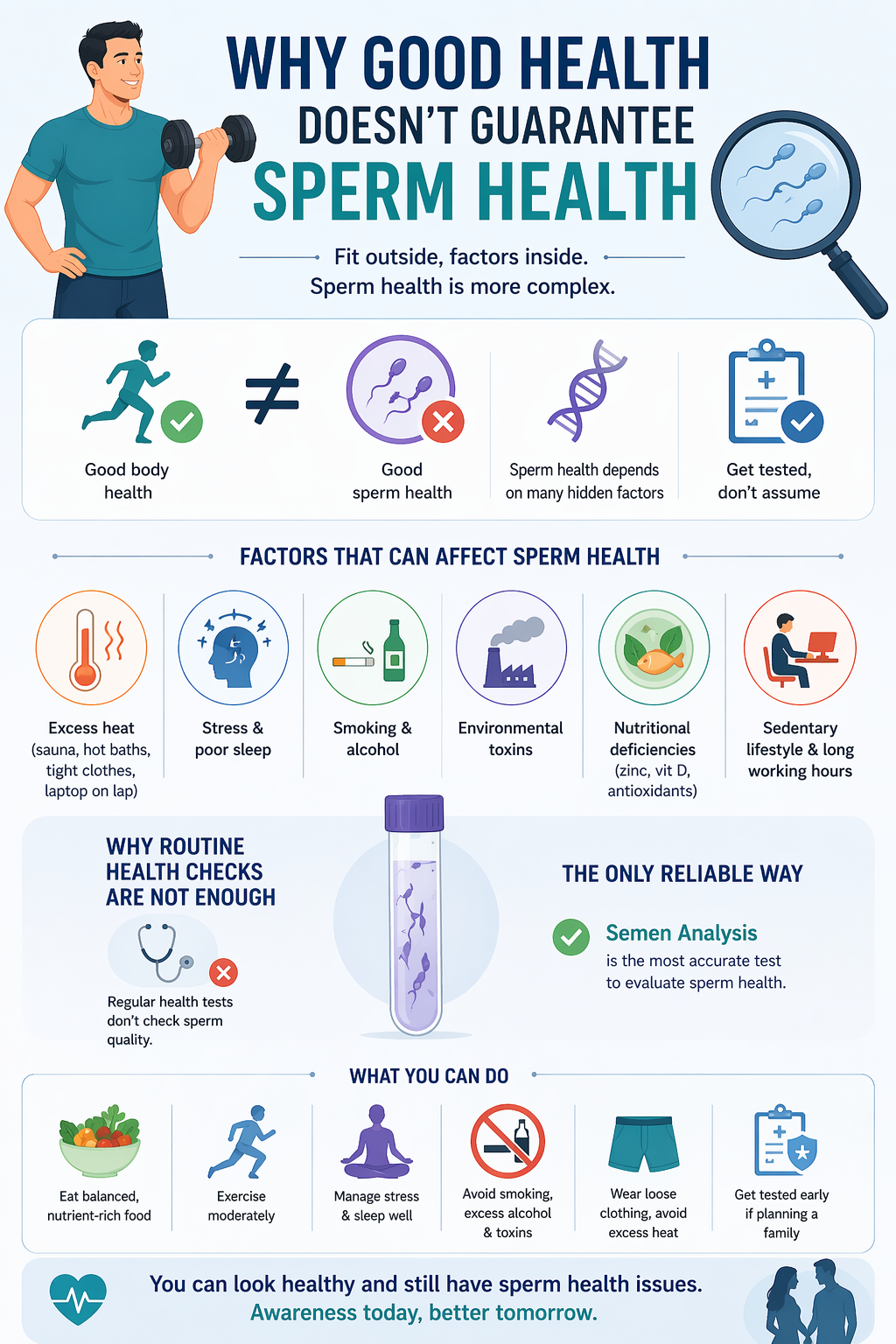
Many men discover fertility issues only when trying to conceive because routine health checks do not assess sperm quality. Early testing and awareness can help bridge this gap.
The gap between general health and fertility
One of the biggest misconceptions is assuming that normal health reports mean normal fertility.Dr Amin puts it plainly: “General health condition is not directly proportional to sperm health.
A man may appear healthy externally, yet still has abnormalities in semen parameters.”Conditions like mild hormonal imbalance or varicocele often go unnoticed. They don’t cause pain or visible illness, but they affect sperm production.This is why many couples only discover male factor infertility when they struggle to conceive.A semen analysis remains the most reliable way to assess sperm health. Routine blood tests or fitness indicators simply don’t cover this area.
Why early awareness matters more than ever
There is a quiet urgency around this topic. Fertility issues are increasing, but awareness is still catching up.Dr Handa stresses, “Having excellent general health is not sufficient in making plans for a family… we must rather focus on screening and sperm health assessment.”The reassuring part is that many factors are reversible. Lifestyle changes, timely medical care, and early testing can improve outcomes significantly.Medical experts consultedThis article includes expert inputs shared with TOI Health by:Dr Meenu Handa, Director – Fertility & Head Academic – Reproductive Medicine, Motherhood Hospitals, Gurgaon.Dr Jayesh Amin, Clinical Director and Fertility Specialist at NOVA Wings IVF, Ahmedabad.Inputs were used to explain why overall good health does not always reflect sperm health, what hidden factors can affect fertility, and when it becomes important to seek medical evaluation despite appearing healthy.

